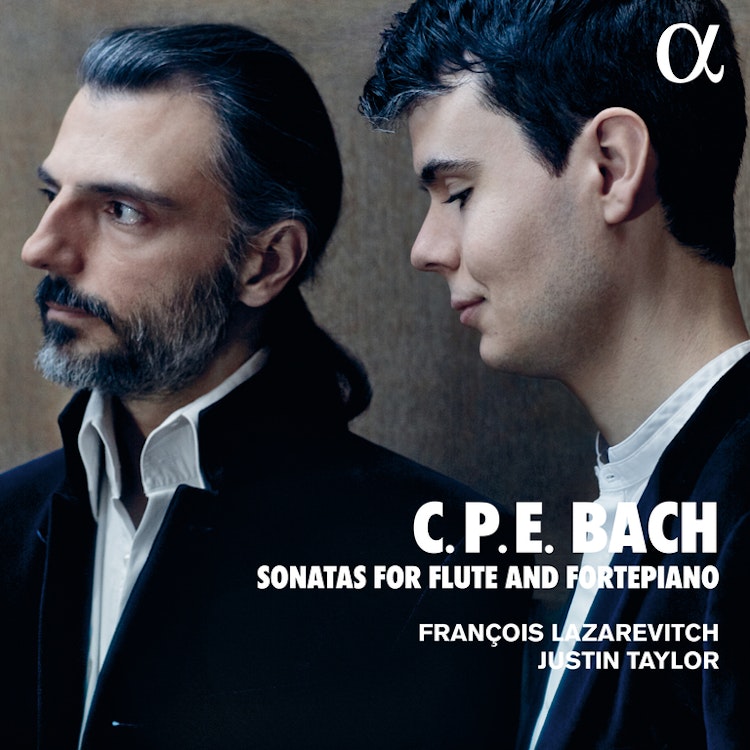
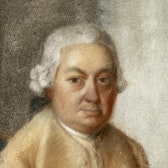
In the latter half of the 1740s, C.P.E. Bach rewrote many of his earlier compositions, destroying most of the originals because he found them too 'youthful'.
Composer's Artistic Vision
C.P.E. Bach's music is characterized by its freedom of tone, harmonic audacity, and sudden, tormented changes of mood, reflecting the 'Empfindsamkeit' or 'sentimental style'.
Historical Context
C.P.E. Bach worked for nearly thirty years in the service of King Frederick II of Prussia, but received a much lower salary than the court flautist, Johann Joachim Quantz.
Composer Biography
Carl Philipp Emanuel Bach, the composer on this album, was the second son of Johann Sebastian Bach, whom he considered immortal.
Compositional Technique
C.P.E. Bach's Sonata for solo flute Wq. 132 features 'linear counterpoint' with low notes creating an imaginary bass line or pedal point, linking it to earlier Baroque styles.
Instruments
The flautist, François Lazarevitch, plays a transverse flute made by Eugène Crijnen in 2002, based on an instrument by A. Grenser.
Composition History
The Trio Sonatas Wq. 143 and 145 were adapted by C.P.E. Bach in 1747 from earlier violin pieces composed in 1731.