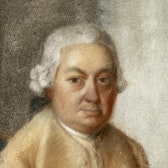
Carl Philipp Emanuel Bach, a central figure between the Baroque and Classical eras, championed a revolutionary aesthetic of feeling, believing a musician must be moved themselves to move others.
Instruments
Johann Joachim Quantz, a prominent flute virtuoso and teacher, innovated flute design by adding a second valve in 1726 to improve the purity of certain tones.
Critical Reception
A thematic catalog of Carl Philipp Emanuel Bach's musical legacy was printed in Hamburg in 1790, a singular event that indicates the extraordinary posthumous esteem he enjoyed.
Composer Biography
Carl Philipp Emanuel Bach's musical career, which included serving the Prussian Crown Prince Friedrich II, culminated in Hamburg where he succeeded his godfather, Georg Philipp Telemann, as the city's Director of Music.
Composition History
Carl Philipp Emanuel Bach's Solo Sonata in A Minor, Wq 132, composed in 1747, was the only one of his flute chamber works published before his death in 1788.
Composer Biography
Carl Philipp Emanuel Bach's interest in the transverse flute was significantly inspired by his encounter with the Prussian Crown Prince Friedrich, later known as 'the Great,' who was a passionate flutist.
Historical Context
The transverse flute gained popularity in Germany due to a German preference for wind instruments, a trend noted by Johann Joachim Quantz, a leading flute virtuoso and teacher.
You might also enjoy...
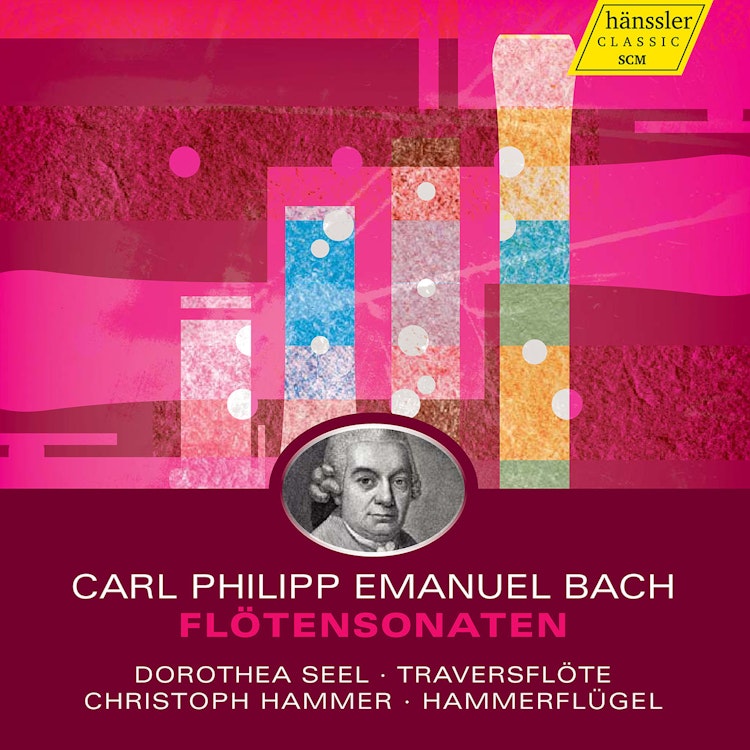
C. P. E. Bach: Sonatas for Flute and Fortepiano
Philidor: Suites for Flute and B. C.
Light and Darkness - C.P.E. Bach: Flute Sonatas
Buffardin: Sonates & Concerto
Cauciello: Trii e duetti
The Celebrated San Martini: Recorder Sonatas by Giovanni Sammartini