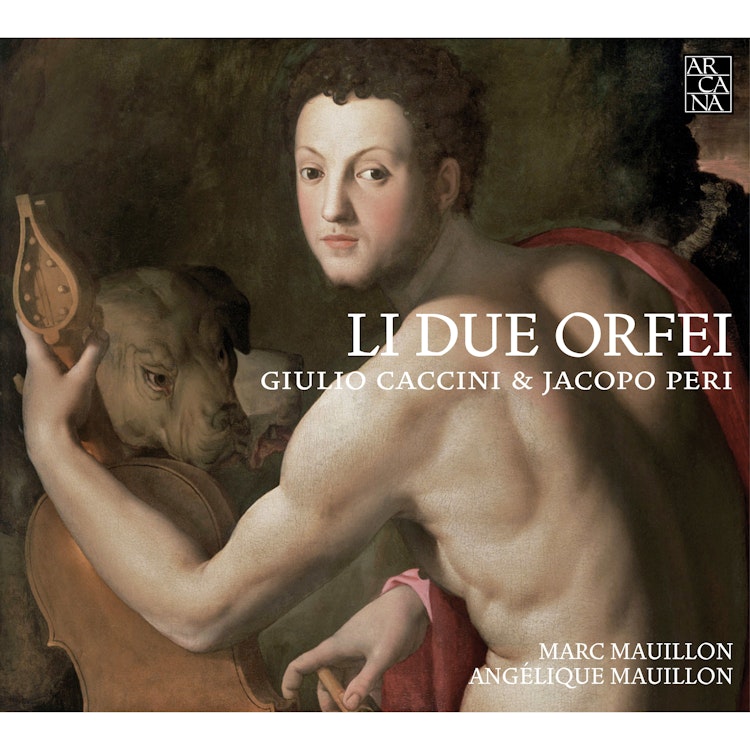
A 'second practice' and 'new types of music' developed in Florence, following aesthetic principles dictated by the desire to imitate the Ancients.
Historical Context
The album explores the Florentine 'invention' of accompanied monody, a new musical style that emerged between 1450 and 1600, driven by the desire to imitate ancient music.
Interpretation
The performers, Angélique and Marc Mauillon, form a familial duo, resonating with the historical practice where composers like Peri and Caccini often performed with family members.
Compositional Technique
The new musical style, stile rappresentativo or recitativo, sacrificed melodic beauty for greater oratorical and expressive realism, featuring repeated notes and varied rhythmic divisions.
Composer's Artistic Vision
For 16th-century musicians, ancient music, known only through theoretical treatises, became a fertile source of inspiration, leading to new original styles.
Historical Context
The mythical image of Orpheus, the poet accompanying his songs with a lyre, was the model that musicians sought to reinterpret in the Renaissance.
Compositional Technique
The thorough bass, a new embodiment of 'Orpheus's lyre', used a simplified notation, a 'musical stenography', allowing the singer to improvise polyphonic accompaniment.
You might also enjoy...
Italian Lute Songs
Caccini: Nuove Musiche & Piccinini: Works for Theorbo
Monteverdi: Salve, o Regina, SV 326
l'Esprit Galant - Boësset, Gautier, Pinel, Lambert, et al.
Lettera Amorosa
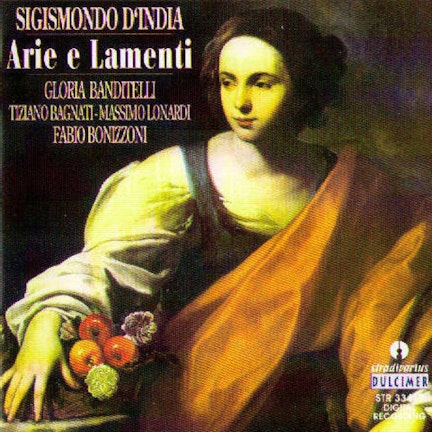
D'India: Arias & Laments
Vivaldi / Caccini / Falconieri / Giordani / Eyck / Gastoldi: Works for Lute and Guitar
Chinary Ung: Grand Spiral
Matrix: Music of Louis Karchin
A Dream
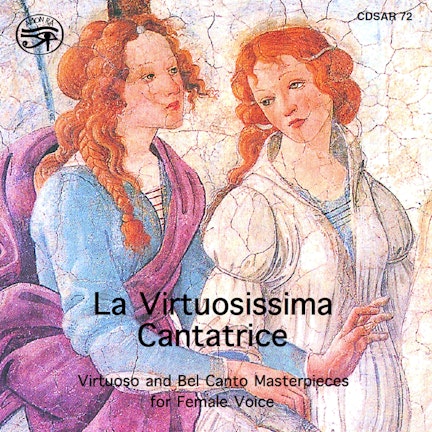
La virtuosissima cantatrice (Virtuoso & Bel canto Masterpieces for Female Voice)
Horn Arrangements - Mendelssohn, Felix / Bach, J.S.
Woud: Serenade / Bourgeois: Fantasia On the Hexachord
Czemiczky / Lendvay / Lang / Soproni / Sugar / Hollos / Madarasz: Contemporary Cimbalom Music