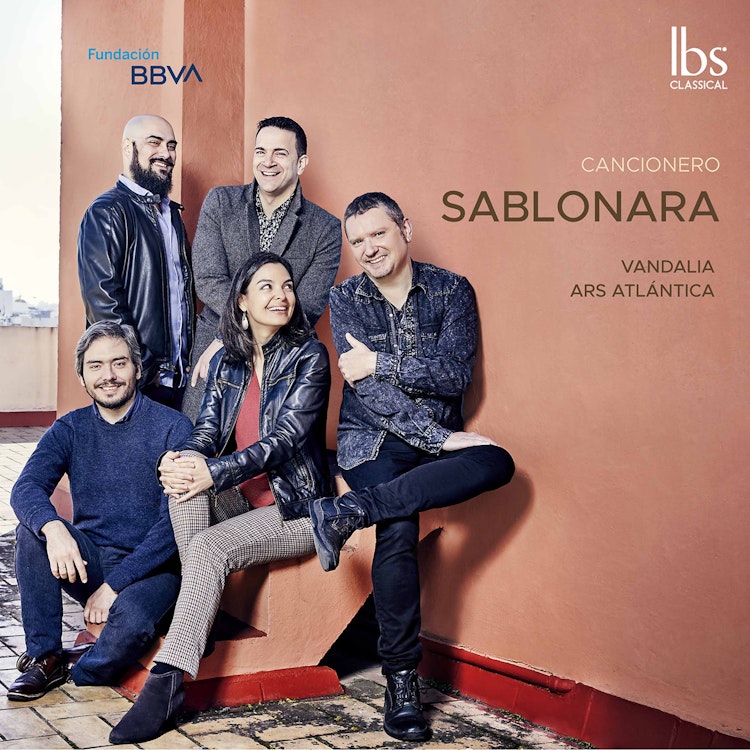
Claudio de la Sablonara, the principal copyist of the Royal Chapel, meticulously compiled and copied the Cancionero de la Sablonara, which contains 75 pieces described as 'the best songs that are sung in this court'.
Composition History
The Cancionero de la Sablonara, a collection of secular vocal music, was compiled between 1625 and 1626 for Wolfgang Wilhelm, a German noble who admired the music he heard at the Madrid court.
Compositional Technique
A notable characteristic of 17th-century Spanish music is its rhythmic singularity, including the increasing use of triple meter and complex rhythms like polyrhythm and syncopation.
Interpretation
Although the Cancionero de la Sablonara only shows vocal parts, historical evidence confirms that these secular songs (tonos humanos) were performed with instrumental accompaniment, often by the singers themselves on guitar, theorbo, or harp.
Composition History
The Cancionero de la Sablonara includes poems by prominent Spanish poets such as Luis de Góngora, Francisco de Quevedo, Calderón de la Barca, and Lope de Vega.
Historical Context
Spanish vocal music of the 17th century is often divided by language: Latin for sacred music, and Spanish for either sacred or secular works.
Composition History
Unlike many contemporary songbooks, the Cancionero de la Sablonara explicitly names the composers for almost all its pieces, providing valuable historical information about early Spanish Baroque authors.
You might also enjoy...
Jack Frost
Byrd: Lulla, Lullaby
Seelentrost
Lorem ipsum
Mozart, W.A.: Adagio & Rondo K.617; 12 Canons
Pachelbel: Un orage d'avril
Still und lieblich
Vivaldi: Solo Concertos
D. Scarlatti: Venezia 1742
Accademia dell' Arcadia - Musica Restituta: Benedykt Cichoszewski