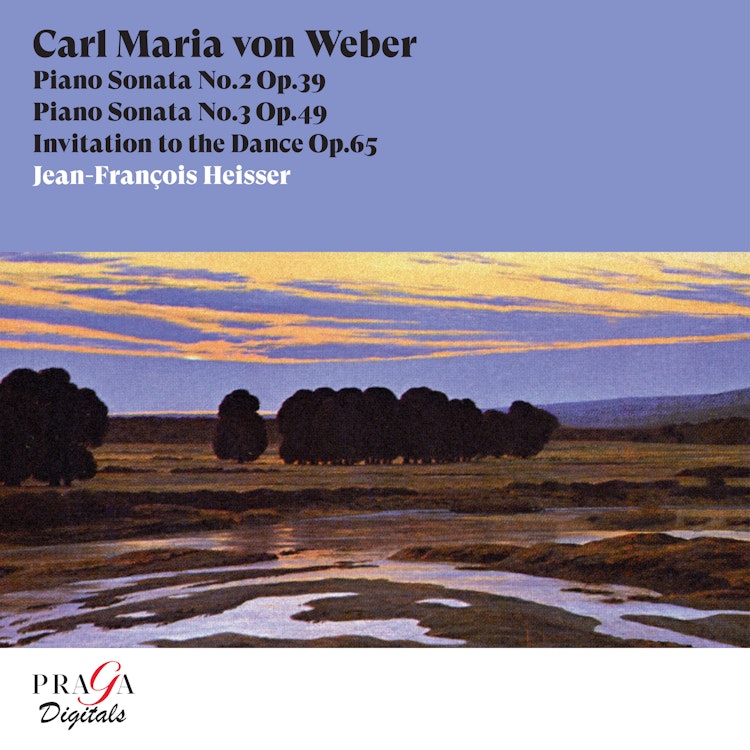
Carl Maria von Weber: Piano Sonatas Nos. 2 & 3, Invitation to the Dance
2/1/2008, 10 Tracks, 1:06:11
Featuring
Jean-François Heisser
Carl Maria von Weber
Did you know?
1/7
Composer's Artistic Vision
Weber's piano music was brilliant and highly demanding technically, but also full of expressive accents and melodic touches with a vocal essence, akin to 'mini-overtures or interludes of operas without words'.
Recording & Production
The Erard piano used for this recording was donated to the French Republic in 1934 and is now part of the Château de Champs-sur-Marne's collection, which has been open to the public since 1974.
Critical Reception
In 1812, critics in Dresden gave Weber a mixed reception, judging his playing style an 'imitation of Spohr' and his music revealing 'a strange and false conception of harmony'.
Compositional Technique
Weber was a brilliant, virtuoso pianist with 'huge hands' that allowed him to play progressions of tenth chords and arpeggio runs, which Chopin would later recall.
Composer Biography
Weber's father, Franz Anton von Weber, attributed his son's rejection in Dresden to the city's high society having no interest in artists unless they were Italian.
Composer Biography
Carl Maria von Weber, the composer, was a top-flight pianist who frequently gave recitals and composed for his instrument throughout almost his entire career.
Instruments
Jean-François Heisser, the pianist, recorded this program on an Erard piano built in 1874, which was originally acquired by the Cahen d'Anvers family for their estate, the Château de Champs-sur-Marne.
You might also enjoy...
Beethoven: Moonlight, Waldstein & Storm
Beethoven : Piano Sonatas
Piano Sonata No. 29 in B Flat Major Op.106 "hammerklavier"
Beethoven: Piano Sonatas Op. 101 & Op. 106, 'Hammerklavier'
Piano Sonata No. 14, Op. 27 No. 2 "Moonlight"
Beethoven: Piano Sonata No. 29, Op. 106 "Hammerklavier"
Beethoven: Complete Piano Sonatas, Vol. 8
Beethoven: Piano Sonata No. 21, Op. 53 "Waldstein"
Beethoven: Piano Sonata No. 11 in B-Flat Major, Op. 22