The theorbo used in this recording is a rare reconstruction based on 17th-century measurements and iconography, differing from Italian instruments with a rounder sound and shorter vibrating length.
Composition History
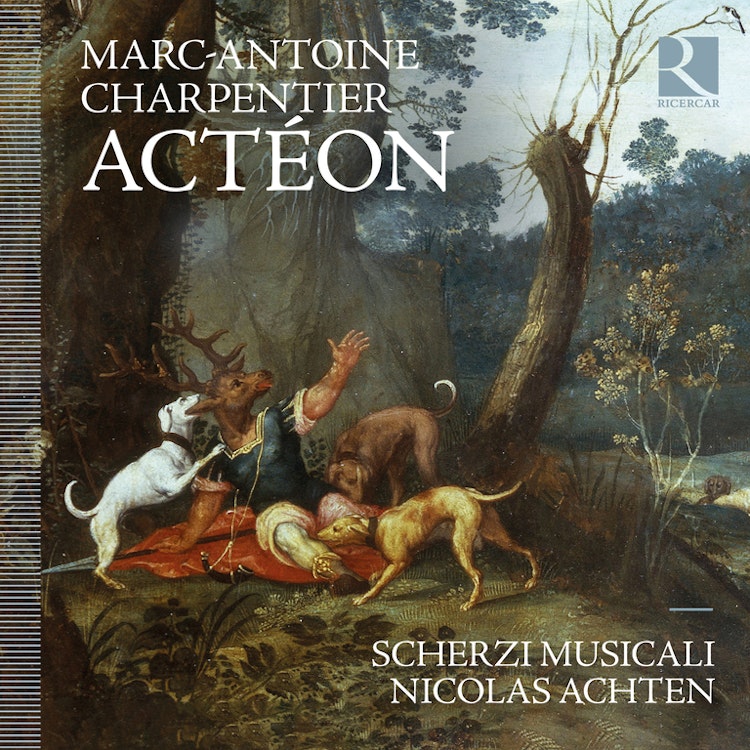
Marc-Antoine Charpentier composed "Actéon" in the spring of 1684, initially terming it a "pastorale en musique" but it is considered a "tragédie lyrique" in miniature.
Composition History
Charpentier revised "Actéon" in the autumn of the same year, creating a second version titled "Actéon changé en biche" where the title role was entrusted to a "dessus" (soprano).
Compositional Technique
The legend of Actaeon, from Ovid's Metamorphoses, was a popular subject in Baroque art, depicting the hunter Actaeon's transformation into a stag by Diana.
Composer Biography
At the time of composing "Actéon", Charpentier was in the service of Marie de Lorraine, Mademoiselle de Guise, and his ensemble consisted of young servants, some still teenagers.
Recording & Production
The performers on this recording aimed to replicate the pronunciation used in 1684, guided by Bénigne de Bacilly's 1679 treatise for singers and contemporary precepts.
Compositional Technique
Charpentier's score for "Actéon" includes stage directions, such as "dans la vallée de Gargaphie" (in the valley of Gargaphia), suggesting it was conceived for the stage.
You might also enjoy...
Magische Töne
Christmas in Vienna III [Live]
El cant de la Sibilla: Sacred Music from medieval Catalunya
The Antiphonal Music of Gabrieli & Frescobaldi
Borodin: Prince Igor (Ivanov, Smolenskaya, Melik-Pashayev) (1951)