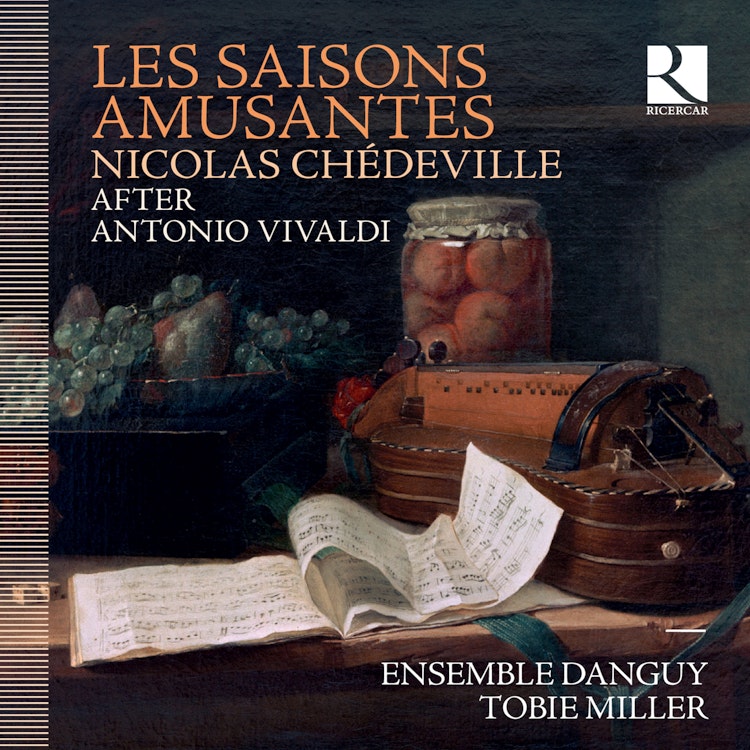
Chédeville: Les saisons amusantes (D'après Antonio Vivaldi)
2/1/2019, 18 Tracks, 51:44
Featuring
Tobie Miller
Ensemble Tanguy
Nicolas Chédeville
Did you know?
1/7
Instruments
The hurdy-gurdy features an asymmetrical bridge shaped like a dog under its highest drone string, which strikes the soundboard to create a percussive effect for articulation.
Cultural Impact
The hurdy-gurdy, initially used in churches and castles, later gained an 'unsavoury reputation' and was associated with beggars and scoundrels, as depicted in paintings by Hieronymus Bosch and Georges de La Tour.
Composer Biography
Nicolas Chédeville, the composer on this album, was born in 1705 into a family of musicians and instrument makers, including oboists and musette players.
Instruments
The hurdy-gurdy, a unique stringed instrument, produces a continuous sound using a rosined wheel turned by a handle, creating an effect similar to an endless bow stroke.
Compositional Technique
Chédeville's transcription of Vivaldi's 'The Seasons' involved adapting the music to the hurdy-gurdy and musette, including modifying notes outside their range and adding French ornamentation.
Composition History
Nicolas Chédeville's 'Les Saisons amusantes' is a transcription of Antonio Vivaldi's 'Il Cimento dell'armonia e dell'inventione', adapted for hurdy-gurdy and musette.
Historical Context
The 18th century was the 'golden age' for rustic instruments like the hurdy-gurdy and musette, as the aristocracy became enamored with them, associating them with bucolic country life.