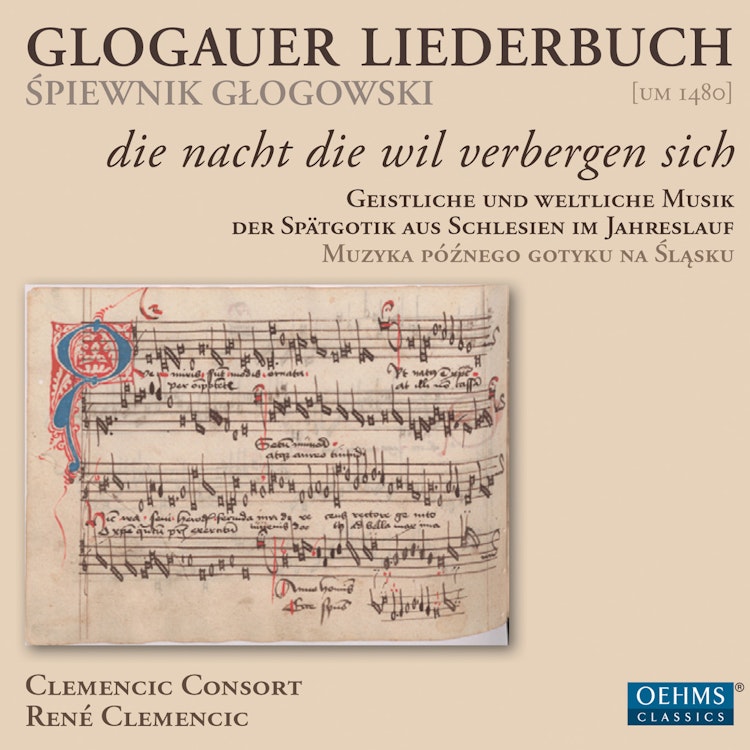
The Glogauer Liederbuch is a diverse collection, featuring 70 German songs, one Italian, one Slavic, 3 quodlibets, 61 untexted instrumental pieces, and 158 Latin vocal pieces including hymns, antiphons, and sequences.
Composition History
The Glogauer Liederbuch is a unique and precious music manuscript created shortly before 1480 in the Duchy of Glogau, located on the border with Poland and Brandenburg.
Composer's Artistic Vision
The Glogauer Liederbuch reflects a community that enjoyed making music for both religious edification and joyful entertainment, embracing both earthly happiness and eternal values.
Compositional Technique
Many instrumental pieces in the Glogauer Liederbuch are untexted vocal pieces, either directly adopted or slightly adapted from an international repertoire of the time, including Dutch, French, and Italian works.
Performer Biography
René Clemencic, the conductor, is a composer, conductor, virtuoso flutist and clavichord player, harpsichordist, and organist, and the founder of the internationally renowned Clemencic Consort.
Historical Context
The region of Silesia, where the Glogauer Liederbuch originated, experienced political turmoil in the 1470s under Matthias Corvinus, but this hardly affected its economic and cultural prosperity.
Composition History
The Glogauer Liederbuch manuscript contains 294 musical pieces, mostly for three voices, which was not the norm at the time of its creation.
You might also enjoy...
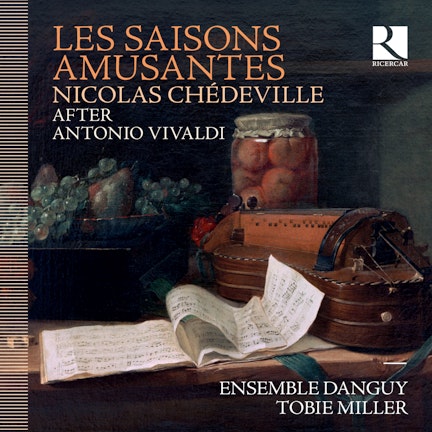
Chédeville: Les saisons amusantes (D'après Antonio Vivaldi)