Robert Schumann, a contemporary composer and critic, recognized Chopin's Waltzes as 'waltzes for souls much more than waltzes for bodies,' highlighting their artistic depth.
Composition History
Only eight of Chopin's Waltzes, composed after he settled in Paris, were published during his lifetime.
Cultural Impact
Sir Charles Hallé, a pianist and conductor who was part of Chopin's circle in Paris, noted that Chopin's music had become the property of every schoolgirl in England.
Compositional Technique
Chopin's Waltzes often feature tempo rubato, an older technique that frees the melody from regular punctuation for expressive effect, which Chopin taught to his pupils.
Composition History
Many of Chopin's Waltzes were held back from publication, some given as gifts to friends and pupils, with Chopin explicitly stating he did not want them widely available.
Composition History
After Chopin's death, his friend Julian Fontana collected five unpublished waltzes into Opp. 69 and 70, but these opus numbers are chronologically inaccurate.
Composition History
Chopin was endlessly self-critical, and the final forms of some waltzes, including the enchanting coda of Op.18, were reached very late in the composition process.
You might also enjoy...
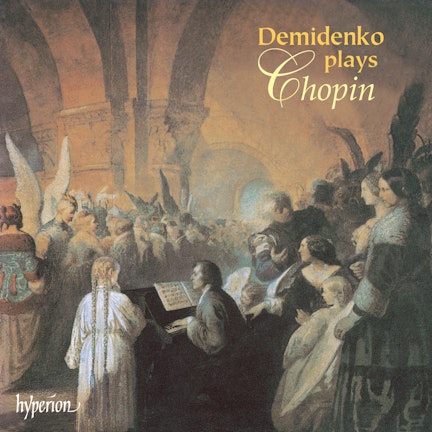
Nikolai Demidenko plays Chopin
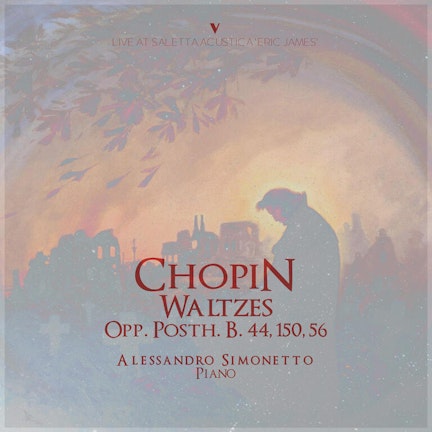
Chopin: Waltz in E Major, B. 44, Waltz in A Minor, B. 150 & Waltz in E Minor, B. 56