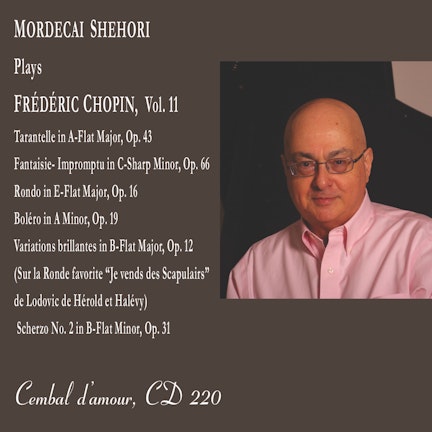
The Tarantella in A flat major, Op. 43, was described by Niecks as a 'transmutation of Rossini into Chopin,' while Schumann found it to be in Chopin's 'most daring manner.'
Composer's Artistic Vision
Chopin once stated he would continue to make changes to the polonaise form until his death.
Compositional Technique
Chopin's Polonaise-Fantasy, Op. 61, replaces the traditional ballroom or salon model with a new structural and expressive entity, embracing diverse elements like dance, sonata development, and nocturne-like melodies.
Recording & Production
This album was recorded in St George's, Brandon Hill, Bristol, on February 21 and 22, 1992, using a STEINWAY piano prepared and maintained by Peter Salisbury.
Composition History
The Allegro de Concert in A major, Op. 46, was completed in May 1841 and draws on material from a concerto sketched in Paris in 1832, and ideas for a two-piano concerto discussed in Vienna.
Critical Reception
While critics like Liszt initially found fault with the Polonaise-Fantasy's design, its unique originality is now beginning to be understood.
Compositional Technique
Chopin frequently composed dance types such as polonaises, mazurkas, waltzes, krakowiaks, and kujawiaks, but also turned to bourrées, ecossaises, tarantellas, and boleros for diversion.
You might also enjoy...
Chopin: Twelve Études, Op. 25
Chopin: Waltz in E Major, B. 44, Waltz in A Minor, B. 150 & Waltz in E Minor, B. 56