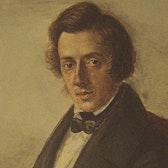
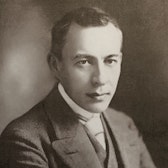
Chopin's Cello Sonata, Op. 65, was dedicated to Auguste Franchomme, the most eminent cellist of his time and a close friend of Chopin in Paris.
Critical Reception
Chopin's Cello Sonata, Op. 65, received a mixed reception, with one critic comparing it to 'a wild overgrown forest, into which only an occasional sunbeam penetrates'.
Recording & Production
For this recording, two different pianos were used: an 1885 Érard piano for the Chopin sonata and a Steinway for the Rachmaninoff sonata.
Composer's Artistic Vision
Chopin's Cello Sonata, Op. 65, is unique in his output as it explores a 'large-scale form' not typical of his usual smaller forms like preludes or waltzes.
Composition History
Rachmaninoff's Cello Sonata, Op. 19, was his last chamber composition, written after he recovered from a deep depression with the help of hypnotherapy.
Composition History
Chopin's Cello Sonata, Op. 65, was his last work published during his lifetime and was composed during a period of deteriorating health and a strained relationship with George Sand.
Instruments
The 1885 Érard piano was chosen for the Chopin sonata to provide greater transparency and balance with the cello due to Chopin's dense piano writing.