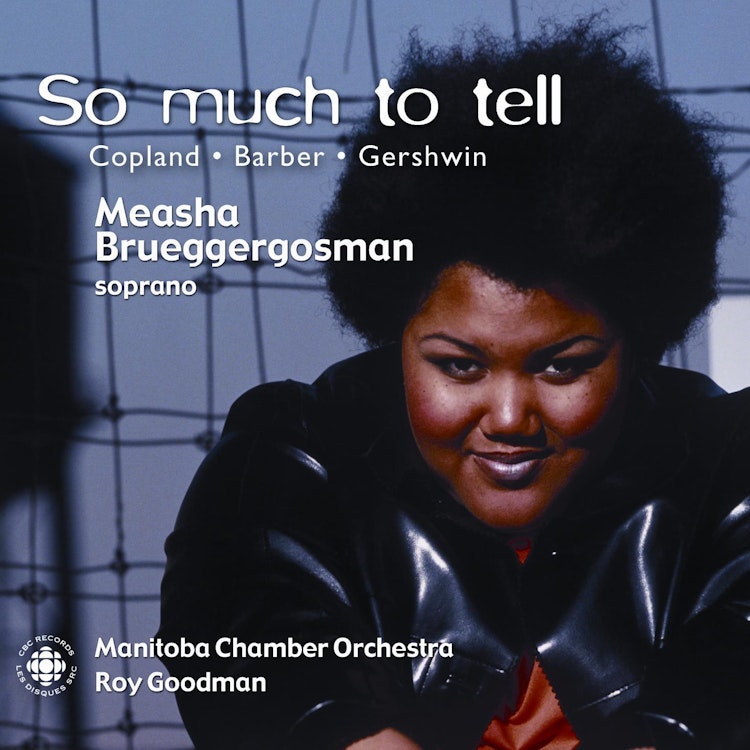
Copland: Eight Poems of Emily Dickinson / Barber: Knoxville - Summer of 1915
1/1/2008, 15 Tracks, 1:04:51
Featuring
Roy Goodman
Measha Brueggergosman
Manitoba Chamber Orchestra
Aaron Copland
Samuel Barber
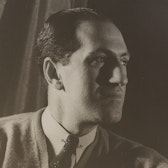
George Gershwin
Did you know?
1/7
Composer's Artistic Vision
Aaron Copland's post-war compositional style, as heard in his 'Twelve Poems of Emily Dickinson', was preoccupied with themes of nature, death, love, and self-realisation, mirroring the central issues in Emily Dickinson's poetry.
Critical Reception
Samuel Barber's 'Knoxville: Summer of 1915' is often cited as his 'most American' work, and its lyrical rhapsody style is frequently compared to the music of Aaron Copland.
Composer Biography
Aaron Copland and Samuel Barber, two composers featured on this album, shared several similarities: both were born in the eastern United States, lived or traveled extensively in Europe, composed across various genres, won Pulitzer Prizes, and died in New York.
Compositional Technique
In Aaron Copland's 'Eight Poems of Emily Dickinson', traditional triadic harmony is rare, replaced by a new consonance created through layering open fifths and fourths, with wide melodic leaps emphasizing Dickinson's poetry.
Compositional Technique
The text for Samuel Barber's 'Knoxville: Summer of 1915' is a prose-poem by James Agee, which Barber rearranged into lines to clarify its rhythm, resulting in a predominantly speech-like musical setting.
Composer Biography
George Gershwin, whose brother Ira Gershwin wrote lyrics for most of his standards, had a diverse career spanning Tin Pan Alley, Broadway, and Hollywood, achieving fame and wealth.
Composer's Artistic Vision
Samuel Barber's 'Knoxville: Summer of 1915' was deeply inspired by James Agee's prose-poem, which reminded Barber of his own childhood summer evenings in a southern town.
You might also enjoy...
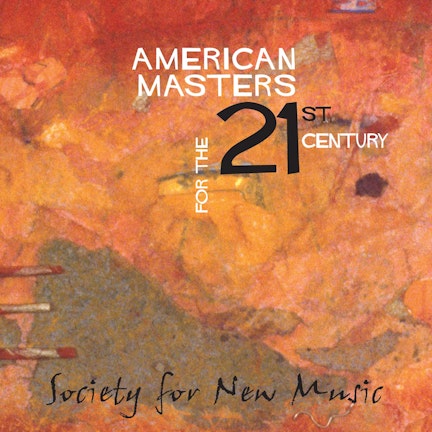
American Masters for the 21st Century (Society for New Music)
Vocal Recital: Larmore, Jennifer - Barber, S. / Berlioz, H. / Ravel, M. / Britten, B. (Royal Mezzo)
Marchaut and his Time: 14th Century French Ars Nova
Let's Dance
Renaissance Music (Instrumental and Vocal) - Le Roy, A. / Praetorius, M. / Bassano, G. / Phalese, P. (La Rocque' N' Roll)
D'or et de lumière (Music for Celebrations)
20th Century Classics: Paul Hindemith (Volume 2)
Commedia! Commedia!
The Last Dance
Jeffrey Mumford: Through a stillness brightening
Shining Light--Music from the Aquitanian Monasteries