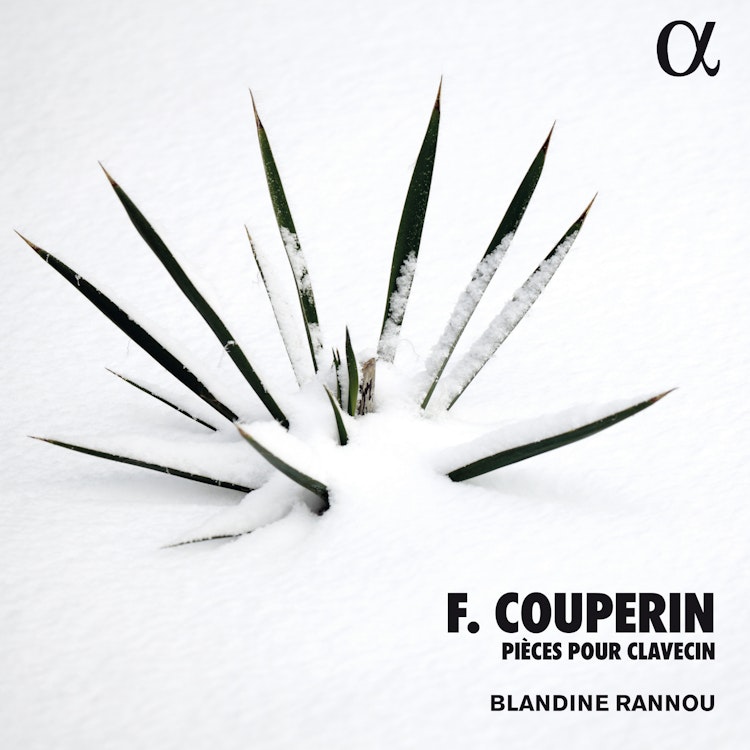
Couperin believed that to give the harpsichord 'a soul' and express emotion, a performer must 'cheat' by delaying or shortening notes and creating silences, allowing imagination to take over.
Compositional Technique
Many of François Couperin's harpsichord pieces are dances, typical of the French style, while others are character pieces without direct choreographic connection.
Instruments
The harpsichord used for this recording was made in Paris in 1988 by Anthony Sidey and Frédéric Bal, copied after a Ruckers-Hemsch instrument from 1636-1763.
Interpretation
The performer, Blandine Rannou, chose to group pieces from Couperin's four books after each of the eight preludes from L'Art de toucher le clavecin, based on Couperin's own remarks about preludes.
Recording & Production
This album was recorded in the Chapel of the church of Notre-Dame de Bon-Secours, Paris, over two sessions in September and October 2003.
Composer's Artistic Vision
Couperin emphasized the importance of character indications at the beginning of his pieces, such as 'languissamment' or 'grotesquement', to transport listeners into specific emotional worlds.
Performer Biography
Blandine Rannou, the harpsichordist on this album, has also recorded French and English Suites by J.S. Bach, and harpsichord pieces by Rameau and Forqueray for the Alpha Classics label.
You might also enjoy...
Révélations
Duphly: Pieces de Clavecin
Couperin: The Complete Pièces de clavecin, Vol. 3
Couperin: Pièces de clavecin, Troisième Livre
Couperin : Complete Works for Harpsichord
Johann Sebastian Bach alio modo
Couperin: Concerts Royaux
Février: Pièces de Clavecin, 1re livre (Paris, 1734) & Second Livre [Paris, c.1736]
Duphly: Pieces de clavecin, Books 1-4
François Couperin: Troisième Livre de Pièces de Clavecin
Couperin: Deuxième livre de pièces de clavecin, Ordre 7