In many Croatian regions, Roman Catholic services traditionally used Old Slavonic and Old Croatian (šćavet) languages in addition to Latin, a practice known as Glagolitic chant.
Historical Context
Croatian priests had a special 'double status' in the Roman church, being allowed to celebrate liturgy in Church Slavonic in regions where it was customary, leading to a bilingual Latin and Glagolitic tradition.
Recording & Production
This album was recorded in the former monks' refectory of the Royaumont Abbey, a 13th-century Cistercian abbey in France, which is now an international cultural center for music and dance artists.
Interpretation
The album features two distinct vocal groups: Dialogos, four female singers, and Kantaduri, six traditional cantors from Croatia, who together explore Dalmatian liturgical music from the Middle Ages.
Composition History
The album features rare pieces from Croatian Latin manuscripts, including some from female monastic communities, and examples of archaic medieval Latin polyphony.
Album & Artwork
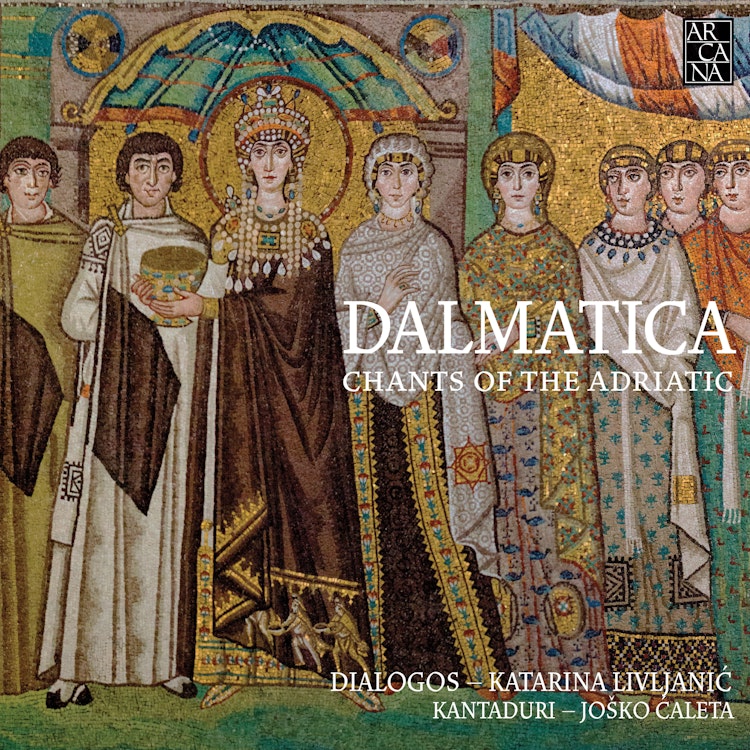
The album's title, 'Dalmatica,' refers to a medieval garment that inspired the project as a symbolic link between Byzantine and Roman liturgical traditions and between men's and women's clothing.
Compositional Technique
The album highlights a surprising variety of musical styles and nuances, even from neighboring cities or villages, challenging the idea of reconstructing a single 'authentic' sound of historic liturgical music.
You might also enjoy...
Aleotti: Le Monache di San Vito
Gesualdo: Madrigals, Book 2
Chant
Music Of The Trouveres
Il Trionfo di Dori
Montagnes Valdôtaines: La joie des choeurs valdôtains
Sub Ursae
Music of the Gothic Era
Laude sulla vita di gesu'
Fricassée parisienne
Albergati: Il Convito di Baldassarro
Fricassée parisienne (Chansons de la Renaissance française)
Portuguese Vocal Masterpieces of the 16th & 17th Centuries, Vol. 1