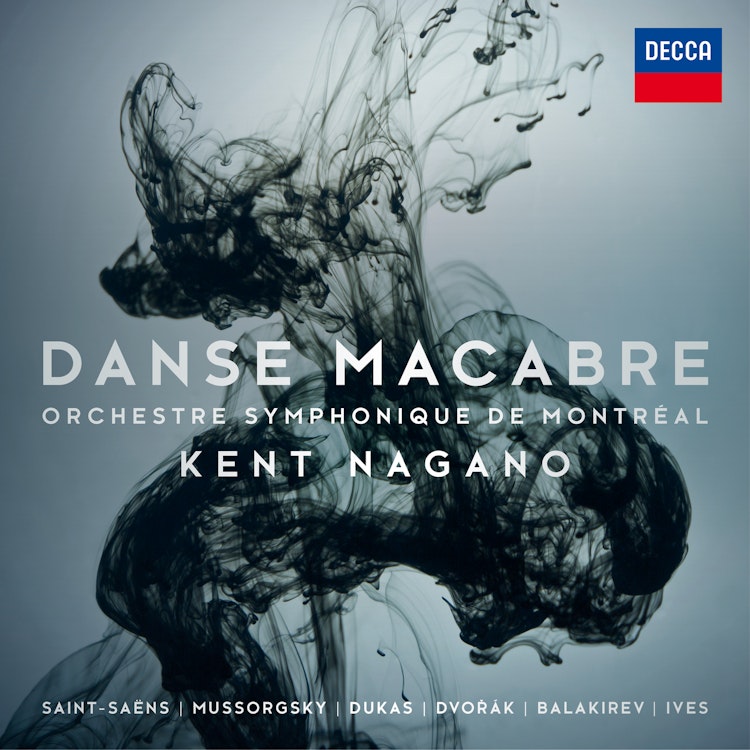
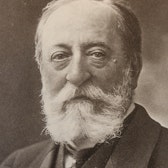
Camille Saint-Saëns's "Danse macabre" uses a xylophone to signify rattling bones and a passage from the Dies irae chant for the dead to create an infernal orchestration.
Compositional Technique
Mily Balakirev's tone poem "Tamara" uses two principal melodic themes to represent the evil Queen Tamara's songs of love, including a seductive passage for solo oboe and snare drum.
Composition History
Modest Mussorgsky's "A Night on the Bare Mountain" was inspired by a Russian legend of a witches' Sabbath on St. John's Eve, which he completed in 1867.
Historical Context
The 19th century saw a widespread fascination with the supernatural, occultism, and gothic horror, influencing composers to evoke the macabre in their music.
Performer Biography
Andrew Wan, the concertmaster for the Orchestre Symphonique de Montréal, performs on a 1744 Bergonzi violin generously loaned by philanthropist David B. Sela.
Composer Biography
Paul Dukas, a fastidious and self-critical composer, censored many of his works and even destroyed several manuscripts, leading to his lasting renown resting almost exclusively on "The Sorcerer's Apprentice."
Cultural Impact
Paul Dukas's "The Sorcerer's Apprentice" became widely known after 1940 as part of the soundtrack to Disney's animated film "Fantasia."
You might also enjoy...
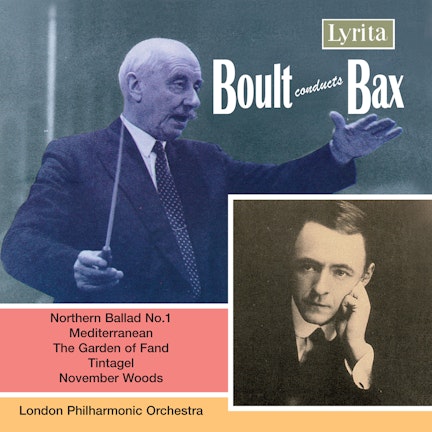
Boult Conducts Bax
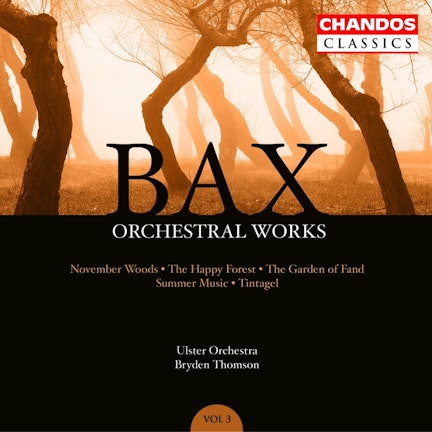
Bax: Orchestral Works, Vol. 3: November Woods / Tintagel / Summer Music
Liszt: Symphonic Poems, Vol. 4
Suk: A Summer's Tale, Op. 29
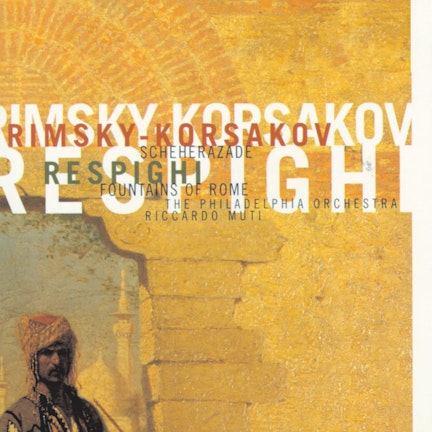
Rimsky - Korsakov - Scheherazade/Respighi - Fountains of Rome
Delius: The Walk to the Paradise Garden; A Song of Summer; Brigg Fair; On Hearing the First Cuckoo in Spring; Paris
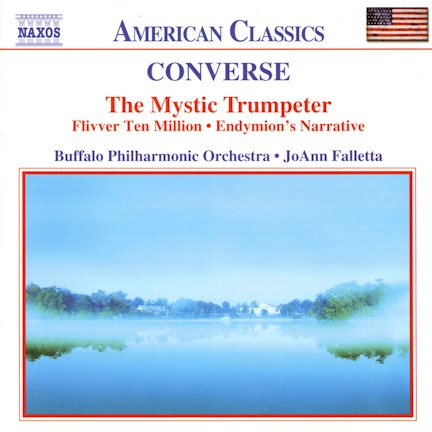
Converse: Mystic Trumpeter (The) / Flivver Ten Million / Endymion's Narrative
Respighi: The Pines of Rome; The Birds; The Fountains of Rome
Respighi: Pines of Rome; The Birds; Fountains of Rome