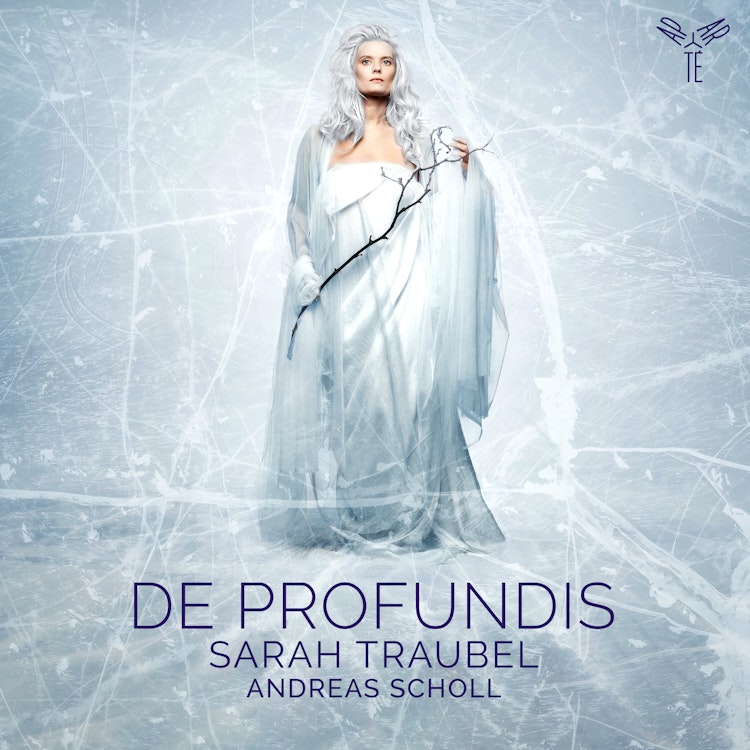
The album's title, 'De profundis', refers to Psalm 130, the sixth penitential psalm of the Old Testament, which is one of the best-known biblical texts.
Composer's Artistic Vision
Arnold Schoenberg's handwritten notes for the soprano in his String Quartet No. 2 emphasize a breath-like, subtle delivery, where only the singing emerges through timbre, not volume.
Composer's Artistic Vision
The album's program describes a long line of Western music from Bach to the 20th century, focusing on the spiritual and erotic theme of being lost and pleading for redemption.
Compositional Technique
Alban Berg's Lyric Suite uses a twelve-tone language and includes numerous allusions and quotations, like Tristan quotes, to describe a story of loss, with secret codes based on the initials of names.
Composition History
Alban Berg, a composer from the Second Viennese School, added a soprano voice to the last movement of his Lyric Suite in 1926, using a German translation of Charles Baudelaire's poem 'De profundis clamavi'.
Recording & Production
The album features a rare vocal bridge from Bach's 'De profundis' music to 20th-century atonal works, performed by soprano Sarah Traubel and countertenor Andreas Scholl.
Composition History
Arnold Schoenberg, a key figure in the Second Viennese School, used Stefan George's poems 'Litanei' and 'Entrückung' in his String Quartet No. 2 to break its traditional structure, moving away from tonal forms.
You might also enjoy...
Bach, J.S.: Sacred Masterpieces
Bach: Sacred Arias and Cantatas
Bach
Magnificat
Bach: Die großen Chorwerke
Bach: Magnificat in E-Flat Major & Missa in F Major
Bach: Die Motetten
Bach: Sacred Arias and Choruses
Bach: Sacred Arias And Choruses
Bach
Bach, J.S.: St. John Passion, Bwv 245 (Highlights)