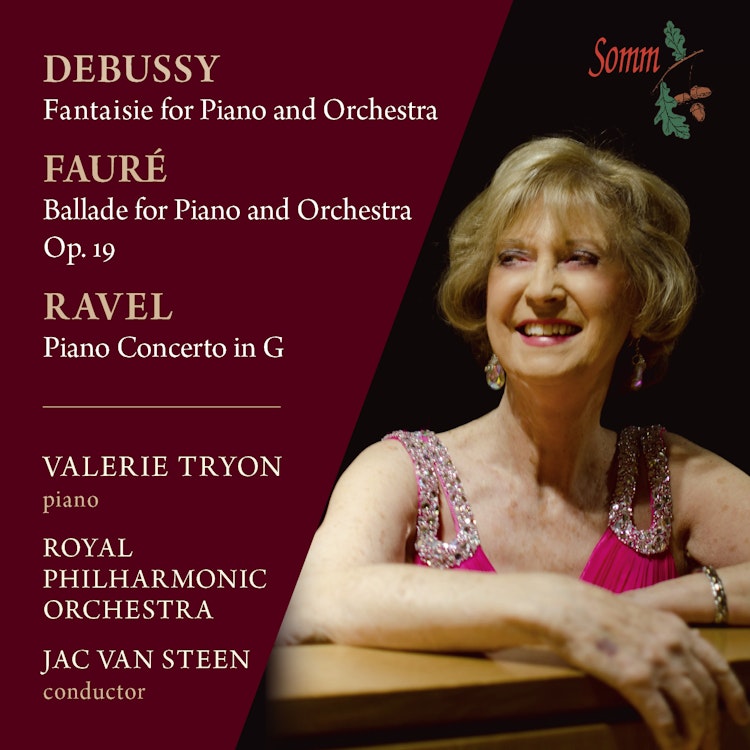
Debussy, Fauré & Ravel: Works for Piano & Orchestra
3/25/2016, 6 Tracks, 1:03:15
Featuring
Jac van Steen
Valerie Tryon
Royal Philharmonic Orchestra
Claude Debussy
Gabriel Fauré
Maurice Ravel
Did you know?
1/7
Composition History
Ravel began his Piano Concerto in G major in 1929, influenced by the jazz and Negro spirituals he encountered during his 1928 tour of North America.
Notable Performances
Debussy's Fantaisie was not premiered until November 1919, a year and a half after his death, because he forbade its performance or publication after withdrawing it from its intended 1890 premiere.
Composition History
Fauré's Ballade for solo piano, Op. 19, was published in 1877 and dedicated to Saint-Saëns; it later became better known in its orchestral version from 1881, possibly after Franz Liszt suggested adding accompaniment.
Composition History
Debussy began his Fantaisie for piano and orchestra in October 1889, at a time when French composers favored shorter works over large-scale piano concertos.
Performer Biography
Valerie Tryon, the pianist, began her concert career as a child, broadcasting for the BBC before she was twelve, and was one of the youngest students admitted to the Royal Academy of Music.
Critical Reception
One critic, after the 1919 premiere of Debussy's Fantaisie, suggested the work marked a path Debussy should have continued, as it was written "before Debussy contracted the whole-tone madness."
Interpretation
Valerie Tryon, the pianist on this recording, studied with Jacques Février, who had direct insights into Ravel's intentions for his works, including the Piano Concerto in G major.
You might also enjoy...
Ravel: Piano Concertos/Honegger: Piano Concertino/Françaix: Piano Concertino
Parisienne
Dai Fujikura: IMPULSE - Piano Concerto No. 3 / Maurice Ravel: Concerto pour Piano et Orchestre, etc.
Gershwin, Ravel: Piano Concertos
Gershwin & Ravel: Piano Concertos
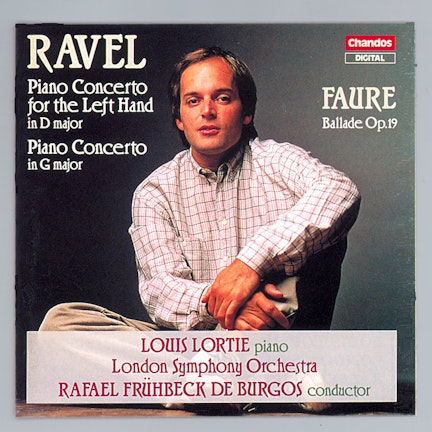
Ravel: Piano Concertos / Faure: Ballade
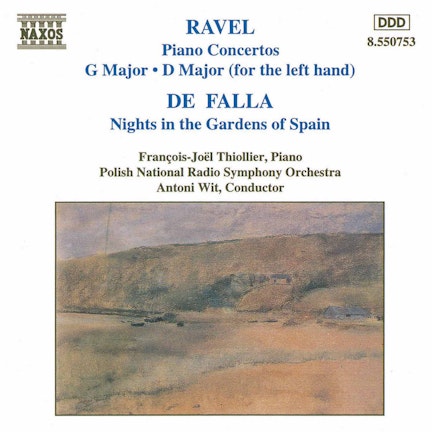
Ravel: Piano Concertos - De Falla: Nights in the Gardens of Spain
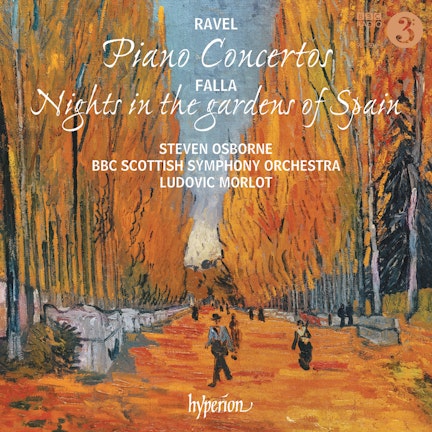
Ravel: Piano Concertos; Falla: Nights in the Gardens of Spain
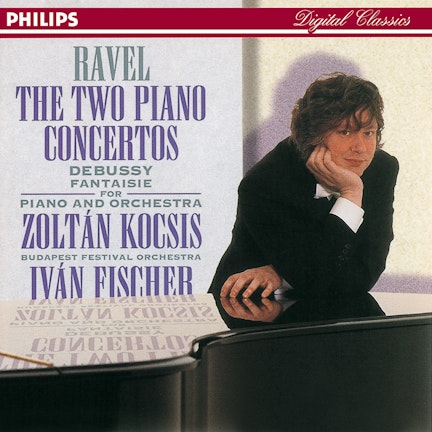
Ravel: Piano Concertos//Debussy: Fantaisie for Piano & Orchestra
Saint-Saëns: Piano Concertos, Vol. 2
Franck / Ravel / Respighi : Piano Concertos
Gershwin, G.: Rhapsody in Blue / An American in Paris / Ravel, M.: Piano Concerto for the Left Hand
Döhler & Dreyschock: Piano Concertos (Hyperion Romantic Piano Concerto 61)
Benedict & Macfarren: Piano Concertos (Hyperion Romantic Piano Concerto 48)