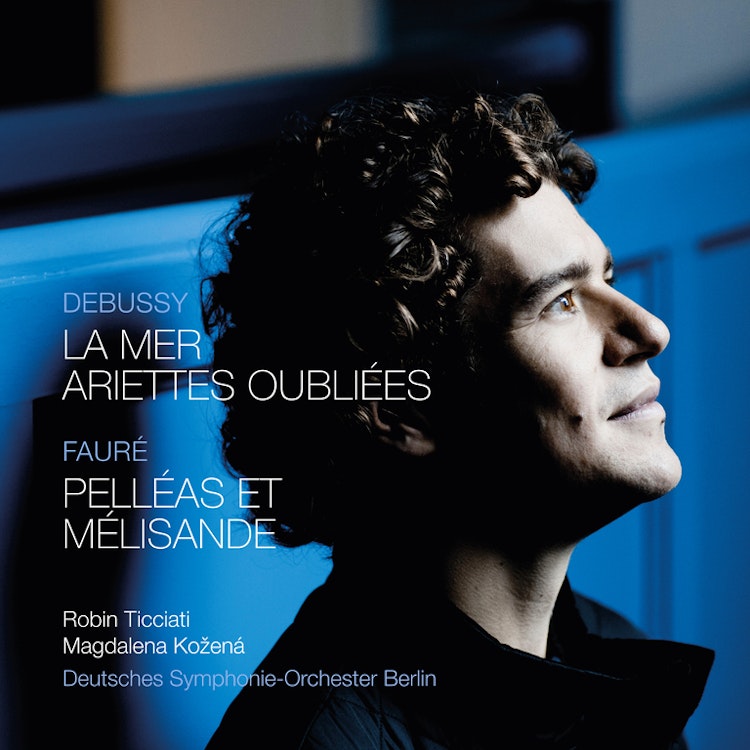
Brett Dean's orchestration of Debussy's "Ariettes oubliées," featured on this album, had its first performance in Sydney in 2015, offering a new perspective on Debussy's music.
Composition History
The genesis of Debussy's "La mer" coincided with turmoil in his personal life, as he left his wife for Emma Bardac, a woman with whom Fauré had also had a serious affair.
Composer's Artistic Vision
Debussy perceived the sea as overwhelmingly female, exploring symbols of goddess, mother, and lover in "La mer" and earlier works, echoing Baudelaire's poem "La musique."
Critical Reception
Debussy's "La mer" was initially met with general disappointment and derision at its premiere in 1905, partly due to its originality and the composer's marital scandal.
Compositional Technique
In "La mer," Debussy, who typically opposed symphonic norms, came closest to symphonic exposition and development, though these processes were masterfully disguised and not immediately apparent to early listeners.
Composer Biography
Claude Debussy and Gabriel Fauré, though born seventeen years apart, both wrote music for Maurice Maeterlinck's symbolist drama "Pelléas et Mélisande" and set the poetry of Paul Verlaine.
Interpretation
The conductor of the premiere of Debussy's "La mer," Camille Chevillard, was criticized by Debussy for his unsympathetic direction, which failed to convey the music's intricacies.
You might also enjoy...
Diepenbrock: Muss Immer Der Morgen Wiederkommen / Marsyas or The Enchanted Well: Suite / Hymne
Nielsen: String Suite / Sallinen: String Quartet No. 3
Bechara El-Khoury: Orages (Live)
Zemlinsky: Sinfonietta, Op. 23, 6 Songs, Op. 13 & Der König Kandaules, Op. 26 (Excerpts)
The Essential Lutoslawski
George Walker: Great American Orchestral Works, Vol. 4
Holst / Warlock / Elgar / Ireland: English Music for Strings
Bernd Alois Zimmermann: Märchensuite / +
Grieg: Sigurd Jorsalfar / Bergliot / Den Bergtekne
Grainger: Grainger Edition, Vol. 8: Works for Wind Orchestra, Vol. 2