Debussy, Stravinsky & Bartók: Transcriptions for 2 Pianists
6/30/2017, 14 Tracks, 1:04:12
Featuring
Jean-Efflam Bavouzet
François-Frédéric Guy
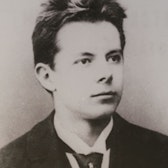
Béla Bartók
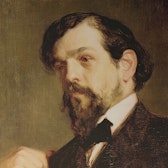
Claude Debussy
Igor Stravinsky
Did you know?
1/7
Composer's Artistic Vision
Béla Bartók, like Claude Debussy, learned from folk music that there were many more possible scales and harmonic worlds beyond major and minor.
Recording & Production
This recording was made in the Arsenal in Metz, France, a prestigious venue reinvented by Ricardo Bofill from a 19th-century military arsenal, known for its acoustics.
Compositional Technique
Le Sacre du printemps is described as machine-like in its form, with abrupt cuts and a sequence of 'shots' akin to a film, making it one of the first pieces of music structured this way.
Interpretation
The two-piano transcriptions on this album aim to refresh the listener's experience of these orchestral works by removing the parameter of timbre, focusing on the music's underlying structure.
Historical Context
All three orchestral works on this album were introduced to the world in 1913, allowing for a comparison of the prevailing aesthetic of that period.
Composition History
Igor Stravinsky's Le Sacre du printemps was primarily known through its four-hand piano version after its initial performances, as the orchestral score was not heard again until after World War I.
Instruments
The recording utilized two Yamaha model CFX concert grand pianos, with serial numbers 6312800 and 6305800, and a Yamaha technician, Kasuto Osato, was present.
You might also enjoy...
Études pour Piano, Vol. 2
Werke für 2 Klaviere
Dances
Liszt: Concerto Pathétique; Schumann: Andante and Variations; Six studies for pedal piano
Piano 4 Mains
French Music for Piano Duo
Rubinstein Collection, Vol. 68: Bach-Busoni; Franck; Liszt