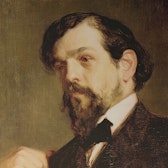
Debussy's Douze Études are experimental, serving as studies not only for the pianist but also for the composer, as the technical object of each piece becomes the theme of the compositional thought.
Composition History
Claude Debussy composed his Douze Études in a three-month creative burst in Pourville, Normandy, in 1915, despite his declining health and the ongoing First World War.
Composer Biography
Witold Lutoslawski, a Polish composer, wrote his Two Studies in 1941 under difficult conditions during the Nazi occupation of Poland, earning a living by performing in secret concerts and cafes.
Compositional Technique
György Ligeti's Étude No. 15, 'White on white,' uses almost exclusively white keys, creating a unique harmonic effect described as a mixture of A minor, C major, and church tonal music.
Critical Reception
Debussy's Études received a cool reception from the public and pianists for a long time, with performances being rare until after the Second World War.
Performer Biography
Erika Haase, the pianist on this album, won the Kranichsteiner Musikpreis in 1959 and has collaborated with György Ligeti and Pierre Boulez.
Compositional Technique
Debussy deliberately omitted fingering instructions from his Études, believing that pianists should discover their own fingering, and that prescribed fingering cannot suit all hand shapes.
You might also enjoy...
Debussy, Stravinsky & Bartók: Transcriptions for 2 Pianists
Dances
Werke für 2 Klaviere
Rubinstein Collection, Vol. 68: Bach-Busoni; Franck; Liszt
Piano 4 Mains
French Music for Piano Duo
Liszt: Concerto Pathétique; Schumann: Andante and Variations; Six studies for pedal piano