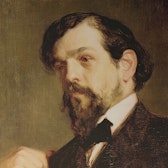
Claude Debussy's solo piano works span his entire creative output, from his early mélodies (songs) of 1882-1885 to his three sonatas of 1915-1917.
Composition History
Debussy's "L'Isle joyeuse" was conceived during his early Suite bergamasque period but was actually written and completed in August 1904 on the island of Jersey, where he and Emma Bardac were beginning their relationship.
Composer's Artistic Vision
Debussy's "Hommage à Rameau" is a tribute to Jean-Philippe Rameau, a French Baroque composer, and was inspired by a "Rameau Revival" and a complete edition of his works that Debussy collaborated on.
Composer's Artistic Vision
Debussy, who rarely traveled, compensated for his lack of direct experience with other cultures by using his imagination, as he stated: "When you don't have the means to travel, you must compensate with your imagination."
Composition History
Debussy's Estampes, composed in 1903, mark a significant turning point in his piano output, moving beyond earlier charming student pieces.
Compositional Technique
Debussy's "Pagodes" from Estampes is more Balinese than Chinese, featuring gamelan sounds, pentatonic scales, and a sustained bass pedal.
Composition History
Debussy never visited Spain, except possibly for a brief trip to San Sebastián in 1880, yet his "La Soirée dans Grenade" is described as a "completely natural-seeming espagnolade."
You might also enjoy...
Debussy: L'isle joyeuse, Images Book I, Etudes Book II & Estampes
Bedtime Debussy
Claude Debussy: Claire de Lune
Debussy: Piano Works, Vol. 2 – Estampes, Children's Corner, Pour le piano & Other Pieces
Debussy que J'Aime
debussy integrale inachevee
Debussy Impressionniste
Debussy: Piano Music, Vol. 4
Debussy: Préludes Book 1; Children's Corner
Debussy : L'oeuvre pour piano, Vol. 1
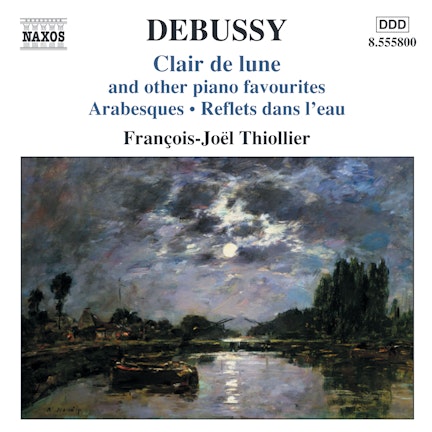
Debussy: Clair de lune and Other Piano Favorites
Debussy: Piano Music, Vol. 3
Debussy: Complete Works for Solo Piano, Vol.1
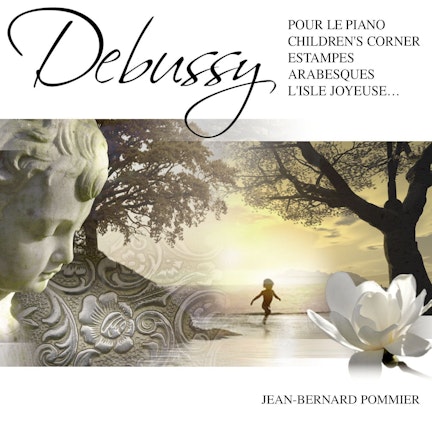
Debussy: Pour le piano - Children's Corner - Estampes - Arabesques - L'Isle Joyeuse