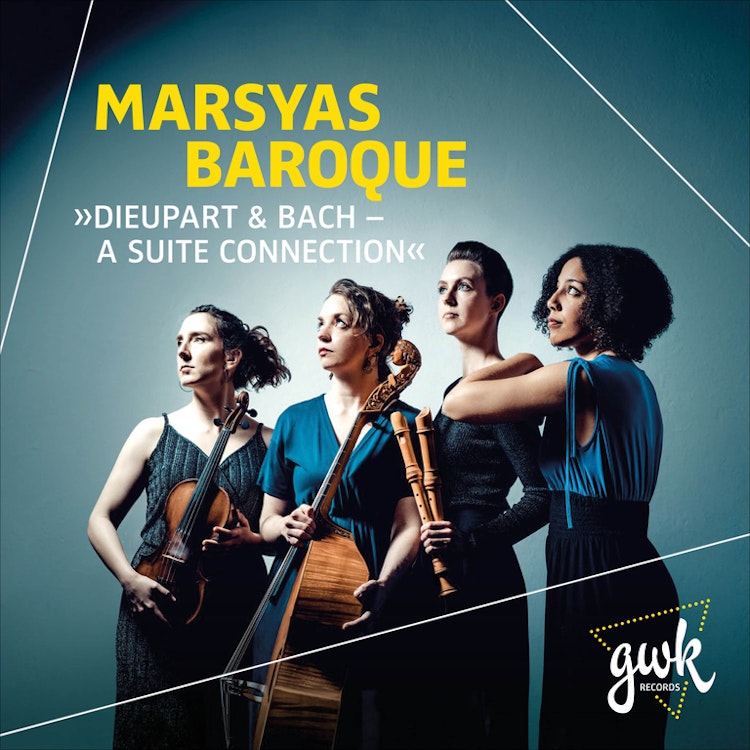
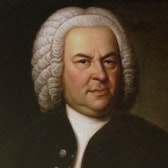
Johann Sebastian Bach was inspired by Charles François Dieupart's musical creations, as evidenced by Bach's careful copy of Dieupart's Six Suittes de Clavessin.
Composition History
Dieupart's Six Suittes de Clavessin, considered his most important compositions, were first published in Amsterdam in 1701 and became widely known across Europe.
Interpretation
The performers experimented with ornamentation, sometimes having accompanying instruments embellish parallel to the harpsichord, and sometimes filling gaps where the harpsichord did not ornament.
Recording & Production
The arrangements of Bach's English Suites for this album involved significant changes, including transposing them to different keys and replacing the Prelude of English Suite II with a French-style Ouverture.
Compositional Technique
Charles François Dieupart was a pioneer in the suite form, systematically structuring his pieces with a specific sequence of dance movements.
Compositional Technique
Dieupart explicitly specified the use of 'Voice Flute' and 'Forth Flute' as recorder types in the first edition of his suites, a rare and detailed instruction for the time.
Interpretation
This album features the 'en concert' version of Dieupart's suites, where instruments like violin, recorder, viola da gamba, and archlute accompany the harpsichord's outer voices, a practice rarely heard today.
You might also enjoy...
Chamber Music (Baroque) - Lotti, A. / Platti, G.B. / Vivaldi, A. / Brescianello, G.A. / Steffani, A. / Montanari, F.
The Privileged Oboe
Souvenirs d'Italie
Gelosia! - Italian Cantatas
Telemann, G.P.: Essercizii Musici - Solos and Nos. 1-6
Froberger: Toccate, Fantasie, Canzoni & Suites
Heinichen: Unpublished Dresden Sonatas
Bach: Brandenburg Concertos Nos. 1-6
Concerti Napoletani per Mandolino
Veracini: Trio Sonatas, Op. 1
Telemann: Cantatas & Sonatas
Chamber Music (Baroque) - Falconieri, A. / Merula, T. / Cabanilles, J. / Storace, B. / Castello, D. / Marais, M. (Folias Festivals)