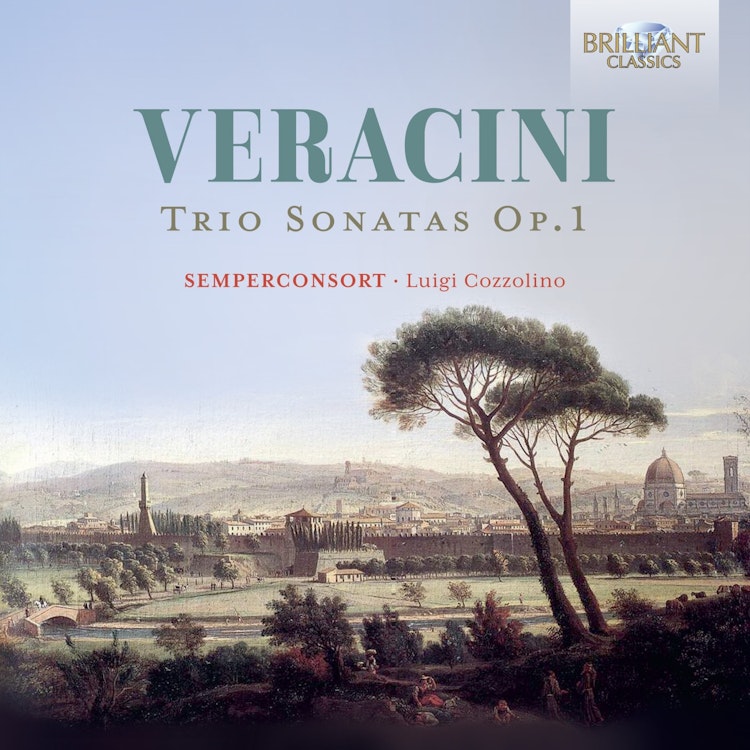
Antonio Veracini, unlike his famous nephew Francesco Maria, rarely left his home in Florence, only traveling to Rome twice and Vienna once.
Compositional Technique
Veracini's trio sonatas are comparable to Corelli's in their fugal first allegro movements and lively trumpet-like idioms, but Veracini's harmonic language is described as 'spicier' with expressive chromatic passages.
Historical Context
The dedicatee, Vittoria della Rovere, Dowager Grand Duchess of Tuscany, was an influential figure who, along with other Medici princesses, played a significant role in patronizing science, arts, and charitable activities.
Performer Biography
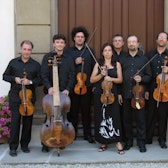
SEMPERCONSORT, founded by Luigi Cozzolino in 1999, specializes in early music from the 17th and 18th centuries, particularly Italian authors, and performs on period instruments or copies.
Composer's Artistic Vision
Veracini's Op.1 was intended to align with the aesthetic ambitions of Grand Duchess Vittoria della Rovere, aiming to transform the sonata into a genre capable of conveying symbolic significance and leading to the contemplation of the immortal.
Composition History
Antonio Veracini's Trio Sonatas Op.1 were published in Florence in 1692 and dedicated to Vittoria della Rovere, the Dowager Grand Duchess of Tuscany.
Instruments
The recording features period instruments, including a 1767 Aegidius Klotz violin, an 18th-century Klotz violin, an anonymous late 18th-century Italian cello, and a 2018 Matteo Baldinelli theorbo.
You might also enjoy...
Barsanti: 6 Recorder Sonatas, Op. 1
Bodinus, S.: Trio Sonatas Nos. 1-6 From Musikalischen Divertissements, Part Iv
Schickhardt: VI Concerts Á 4 Flutes Et Basse Continue
J.S. Bach: Trio Sonatas, BWV 525-530
The Organ at European Courts
Telemann: Trios pour le dessus de viole
Buxtehude: Cantatas & Sonatas
Purcell: Songs & Dances
Chamber Music (Baroque) - Falconieri, A. / Merula, T. / Cabanilles, J. / Storace, B. / Castello, D. / Marais, M. (Folias Festivals)
Mudge, R.: 6 Concertos A 7 (Capriccio Baroque Orchestra)