In 1897, theorist Ebenezer Prout stated that Mozart's concert aria Per questa bella mano (K612) was the only example he knew of the double bass as a soloist, though some considered it "quite impossible" to play.
Historical Context
Before the work of Adolf Meier in the 1960s, there was little modern understanding of the double bass as it was used in Dittersdorf's time.
Performer Biography
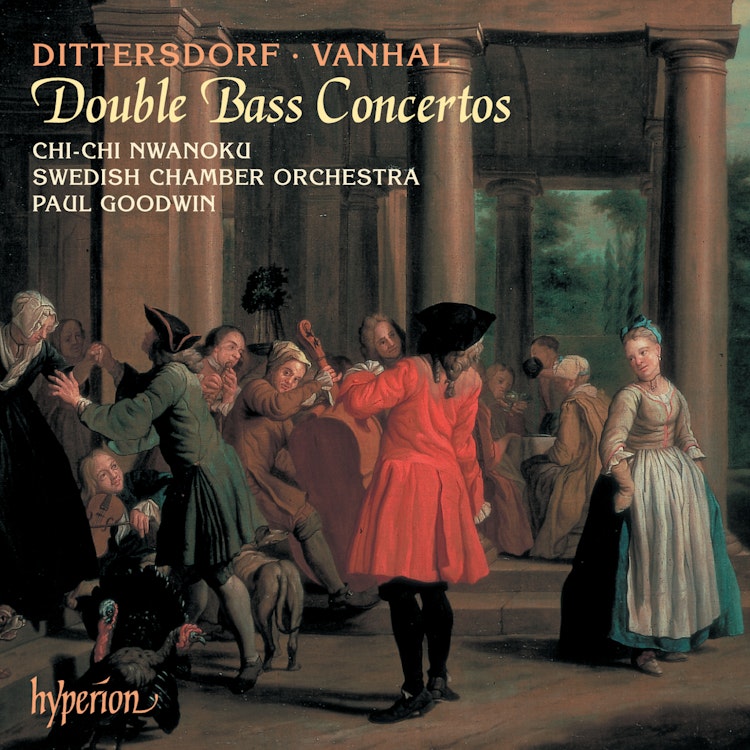
Chi-chi Nwanoku, the double bassist on this album, was a national-level 100-meter sprinter before a knee injury led her to pursue a career in music at age 18.
Instruments
Research by Adolf Meier revealed that many 18th-century Viennese double basses were originally five-stringed, probably fretted, and tuned differently from modern instruments.
Historical Context
The double bass was not standardized in the 17th and 18th centuries, with instruments varying greatly in size, string count (four to six), and tuning.
Compositional Technique
Many 18th-century solo double bass works were adapted for modern instruments, often losing their original classical shape due to transpositions, inversions, or omissions of passages.
Composer Biography
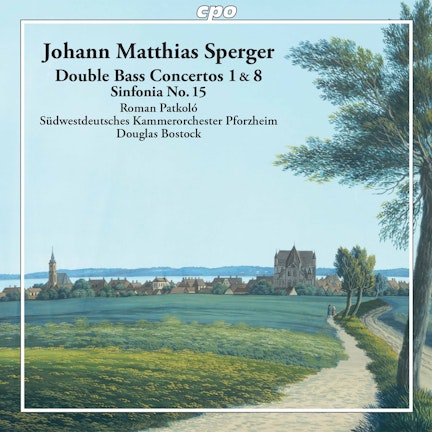
Johann Matthias Sperger (1750-1812), a virtuoso bassist, was also a respected composer of 45 symphonies, masses, and concertos, including 17 for his own instrument.