The musicologist Ralph Kirkpatrick, who authored a fundamental biography and the first complete catalog of Scarlatti's sonatas in 1953, initially shared a dismissive view of Scarlatti's vocal works.
Composer Biography
Domenico Scarlatti, the composer, served as 'maestro di cappella' to the widowed queen Marie Casimire of Poland in Rome, who sought to make her residence a center of Roman cultural life.
Composition History
Scarlatti's cantata Pur nel sonno almen was likely composed during his time in Seville and Madrid, after he followed his pupil Princess María Bárbara, who married the future King Ferdinand VI of Spain.
Composer Biography
The celebrated castrato Farinelli, known for his powerful voice, was summoned to the Spanish court in 1737 to alleviate the melancholia of King Philip V, and Scarlatti may have received cantata texts from him.
Composition History
Domenico Scarlatti composed around 555 harpsichord sonatas for Princess María Bárbara, who later became Queen of Spain.
Compositional Technique
Scarlatti's Stabat Mater uses a 'stile misto' (mixed style) of counterpoint, which is less restrictive than the 'stile antico' and allows for a bolder harmonic palette.
Composition History
Scarlatti's opera Amor d'un'Ombra e Gelosia d'un'aura was premiered on January 20, 1714, on the miniature stage of Queen Marie Casimire's private theatre in Rome.
You might also enjoy...
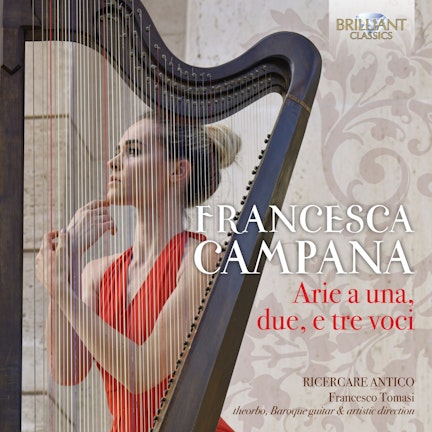
Campana: Arie a una, due e tre voci
Chamber Music (Baroque) - Vivaldi, A. / Tartini, G. / Sammartini, G. (Fire Beneath My Fingers)