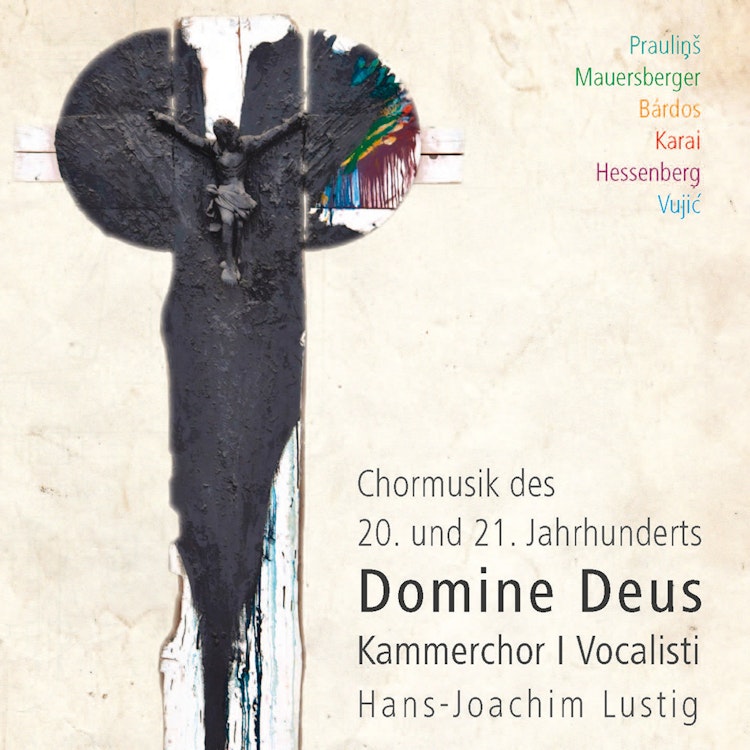
Domine Deus: Choral Music in the 20th & 21st Centuries
9/6/2012, 15 Tracks, 1:01:52
Featuring
Hans-Joachim Lustig
Kammerchor I Vocalisti
Uģis Prauliņš
Rudolf Mauersberger
György Deák-Bárdos
József Karai
Kurt Hessenberg
Aleksandar S. Vujić
Did you know?
1/7
Interpretation
The Kammerchor I Vocalisti focuses on a cappella compositions from the 20th and 21st centuries, often with composers they have a personal connection or long-standing working relationship with.
Composer Biography
Aleksandar S. Vujić, a Serbian composer, has created over 80 compositions, mainly for choir, combining traditional music from various regions and religions with his unique harmonic style.
Composition History
Rudolf Mauersberger's motet "Wie liegt die Stadt so wüst" was composed in just two days in 1945, under the direct impact of the devastating bombing of Dresden and the loss of eleven of his students.
Composer Biography
Uģis Prauliņš, the composer of Missa Rigensis, had an unusual career path, starting as a sound engineer and rock musician before turning to serious choral music.
Performer Biography
Hans-Joachim Lustig, the conductor, founded the Kammerchor I Vocalisti in 1991 and has won numerous awards for his creative programming and interpretation of contemporary music.
Compositional Technique
József Karai's "De profundis" is a nine-voice work that places high demands on the choir, featuring aleatoric passages, iridescent clusters, ecstatic spoken singing, and stable sound structures that collapse with glissandi.
Album & Artwork
The album's title, "Domine Deus," refers to a common address in liturgical texts, meaning "Lord God."
You might also enjoy...
Poos: Magnificat / Sphragis / Nachklänge / Hypostasis / Zeichen am Weg
Jackson: Requiem
Elektra Women's Choir: Legacy
Norgard: Singe Die Garten
La Jeune France
Zeit und Ewigkeit
Lyrically
Choral Settings of Kassiani
Penderecki: Sacred Choral Works
O heilige Nacht. Romantische Chormusik zur Weihnachtszeit