In Guide to Strange Places, John Adams explores a unique zone between 'groove' and traditional perpetual motion, using unpredictable rhythmic unfolding as a canvas for bizarre transformations.
Composer's Artistic Vision
Composer John Adams describes his piece Guide to Strange Places as inspired by a French travel guide he found in Provence, which detailed strange geological formations, unusual climatic occurrences, and horrific historical events.
Compositional Technique
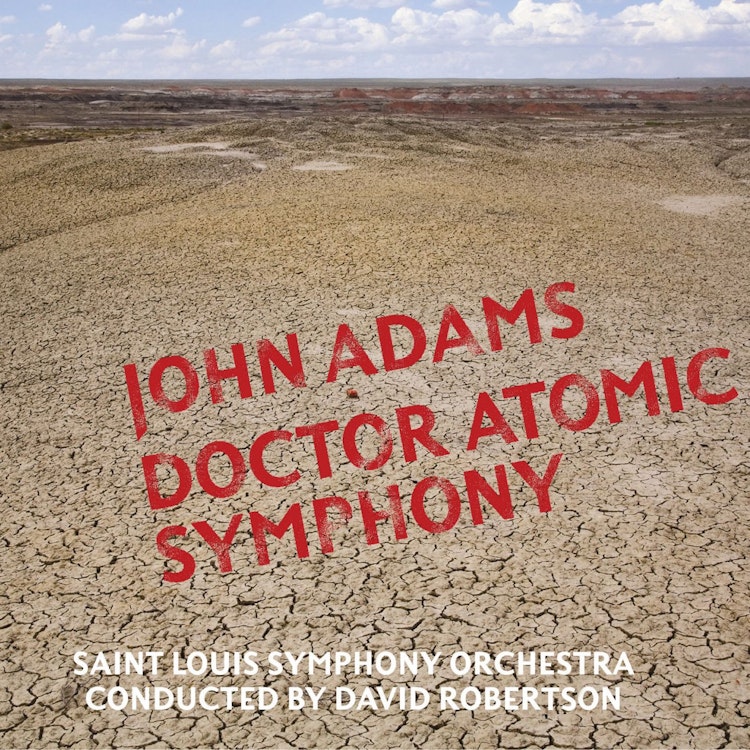
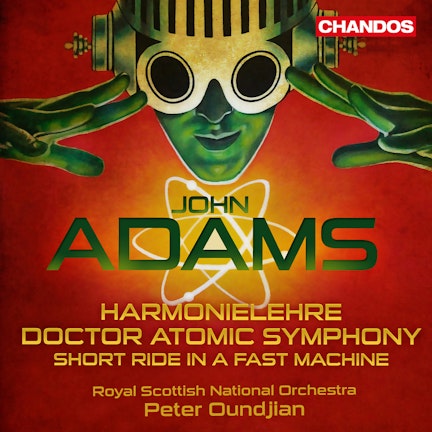
The Doctor Atomic Symphony uses music to depict 'heartless' scientific themes like explosions, spatial concentration, and the expansion of single notes into vast clouds.
Compositional Technique
The final movement of Doctor Atomic Symphony features a memorable aria from the opera, with text by John Donne, assigned to the trumpet, which is a powerful and unintuitive choice.
Recording & Production
This recording was produced by Steven Epstein and engineered by Richard King, with mixing done at SevenSeas Studios in New York City.
Composition History
John Adams's Doctor Atomic Symphony is a reworking of musical material from his opera Doctor Atomic, which tells the story of J. Robert Oppenheimer before the first nuclear detonation.
Composer's Artistic Vision
Composer John Adams considers all his pieces to be 'travel pieces,' often through 'paysages insolites' (strange places), which is how he experiences musical form.
You might also enjoy...
John Adams: Absolute Jest & Naive and Sentimental Music
Copland: Statements
Copland: Prairie Journal (Recorded 1985)
Diamond: The World of Paul Klee (Recorded 1960)
Ellington: A Tone Parallel to Harlem (Recorded 1999)
Live From Powell Symphony Hall - John Adams: Harmonielehre