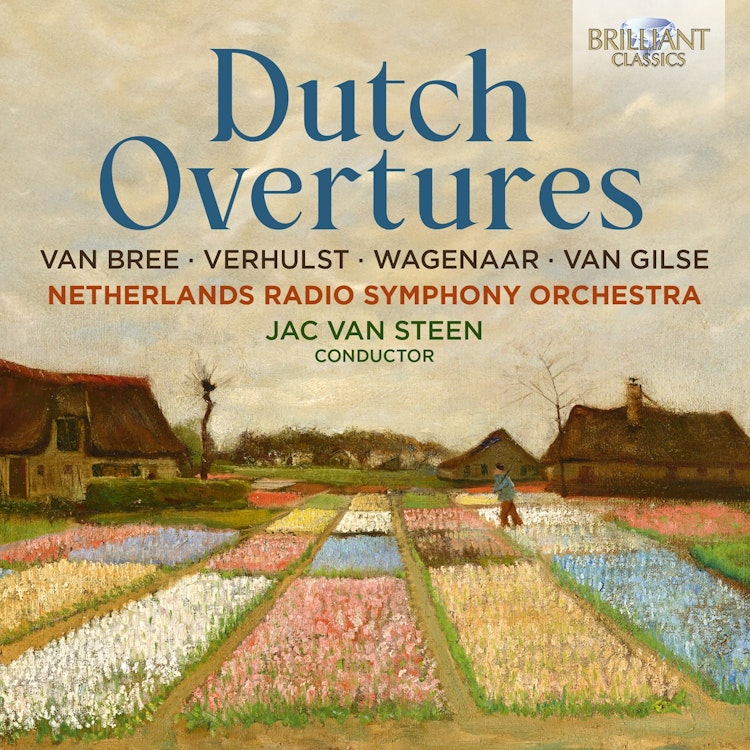
Dutch Overtures: Van Bree, Verhulst, Wagenaar, Van Gilse
8/30/2024, 6 Tracks, 57:25
Featuring
Jac van Steen
Netherlands Radio Symphony Orchestra
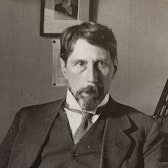
Johannes Bernardus van Bree
Johannes Verhulst
Johan Wagenaar
Jan van Gilse
Did you know?
1/7
Composer's Artistic Vision
Johannes Verhulst, unlike Schumann and Mendelssohn, allowed musical episodes to grow by expanding motifs sequentially, resulting in less sharp breaks and more blending harmonies in his instrumentation.
Composer Biography
Johannes van Bree (1801-1857), a composer featured on this album, frequently performed as an opera conductor and composed several successful operas, including 'Le bandit' (1835).
Historical Context
The 19th-century Dutch nationalism led to an intense search for national identity roots, often found in the Protestant Golden Age of the 17th century, inspiring composers like Verhulst to write music based on works like Vondel's 'Gijsbrecht van Aemstel'.
Compositional Technique
Dutch overtures of the 19th century are generally mild in tone, lack theatricality, and often feature a transparent orchestral sound, drawing inspiration from composers like Weber, Mendelssohn, and Boieldieu.
Composer Biography
Johannes Verhulst (1816-1891), another composer on this album, was a friend of Robert and Clara Schumann, and his music was highly regarded by Mendelssohn.
Historical Context
In 19th-century Dutch orchestras, amateurs often played first violin, and the 'orchestra associations' in cities like Utrecht, Rotterdam, and Amsterdam included a significant number of amateur musicians.
Composer Biography
Jan van Gilse (1881-1944), a composer on this album, was expelled from the Cologne conservatory after inadvertently becoming involved in a relationship between a teacher and a student, and then confronting the director.
You might also enjoy...
Tchaikovsky: Festival Overture On the Danish National Hymn / Hamlet
Offenbach, J.: Orchestral Music From Operettas
Overtures from the British Isles
British Opera Overtures
Lehár: Overtures & Waltzes
Lortzing: Opera Overtures
Reznicek: Orchestral Works
Joseph Martin Kraus: Voix des Lumières
Moniuszko: Overtures
Beethoven: Leonore Overture - Reinecke: Flute Concerto in D Major
Horneman: Orchestral Works
Orff: Carmina Burana & Glinka: Overture from Ruslan and Ludmilla