The 19th century saw a rise in national awareness across Europe, impacting Czech identity and culture, as independent nationhood was an aspiration while part of the Austrian Empire.
Composer Biography
Dvořák's 'Slavonic Dances' for piano duet, composed at the prompting of publisher Simrock, were so successful they helped spread his name across Europe, Britain, and the United States.
Historical Context
Prague, once largely German-speaking, became majority Czech-speaking by the 1870s due to factory work drawing people from the countryside, leading to a demand for Czech cultural institutions.
Critical Reception
Dvořák dedicated his 'Legends' to the influential Viennese critic Eduard Hanslick, who, in a review, declared that 'all of them are beautiful!'
Compositional Technique
The 'Slavonic Rhapsodies' achieve cohesion through Dvořák's inspired use of Franz Liszt's technique of thematic transformation, despite their variety of tone.
Compositional Technique
A common feature of Dvořák's 'Slavonic Rhapsodies' is their highly-coloured orchestration and the frequent use of infectious, dance-like characteristics from his faster 'Slavonic Dances'.
You might also enjoy...
Albéniz: Suite española No. 1; Cantos de España; Fauré: Fantasie, Op. 111
Brahms: Piano Quartet No. 1 / Variations and Fugue On A Theme by Handel (Arr. for Orchestra)
Portraits - Elgar: Enigma Variations & Mussorgsky: Pictures at an Exhibition
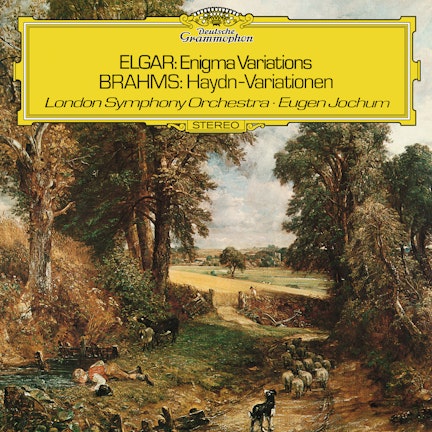
Elgar: Variations On An Original Theme, Op. 36 "Enigma" / Brahms: Variations On A Theme By Haydn, Op.56a
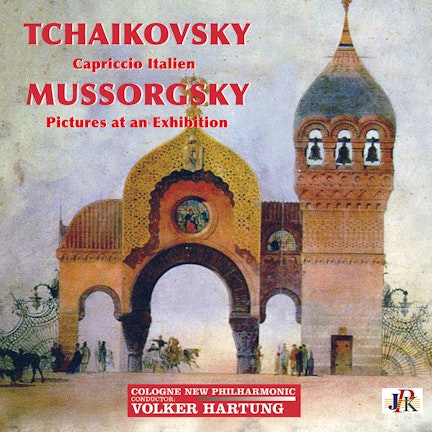
Tchaikovsky: Capriccio italien, Op. 45, TH 47 - Mussorgsky: Pictures at an Exhibition (Orch. M. Ravel)
Brahms: Piano Quartet in G Minor; Bach: Prelude and Fugue, "St. Anne"; 2 Chorale Preludes (orchestrated by Arnold Schoenberg) [Great Performances]
Richard Strauss: Orchestral Music
Strauss: Symphonic Music from Strauss Operas
Pops Plays Puccini
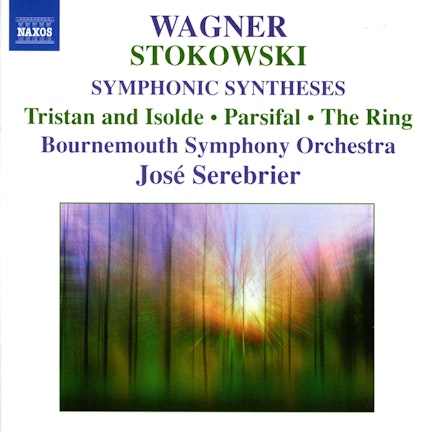
Wagner: Symphonic Syntheses by Stokowski
Stanford: Irish Rhapsodies Nos. 1-6 / Piano Concerto No. 2 / Down Among the Dead Men