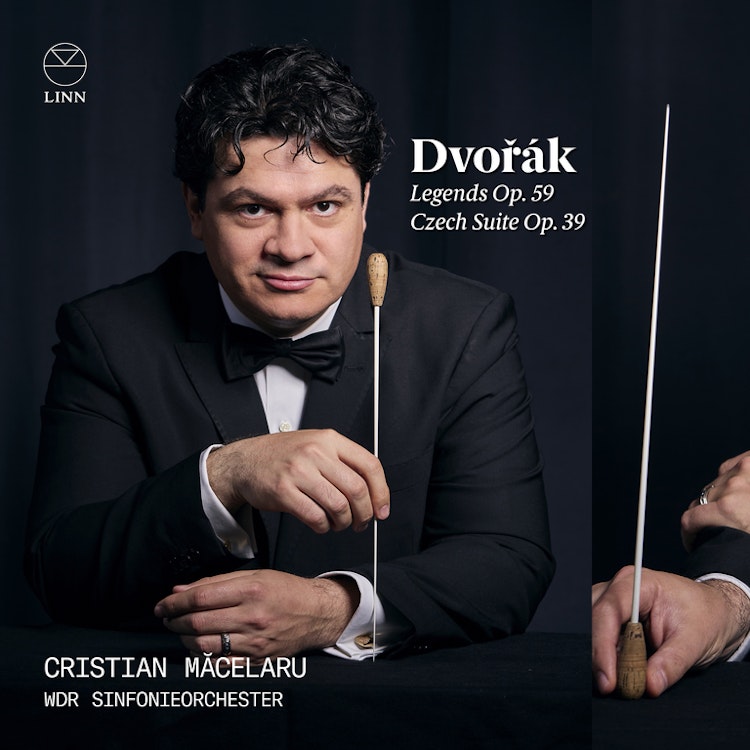
The Česká Suita (Czech Suite) had its premiere performance at the Prague Interim Theatre on May 16, 1879.
Composition History
Dvořák's Legends, Op. 59, were originally composed in February and March 1881 as a cycle of ten short, narrative pieces for piano four hands, and later arranged for orchestra at the request of his publisher, Simrock.
Compositional Technique
In the Czech Suite, Dvořák adopted the Baroque suite's formal structure but infused it with Romantic and folk-like content, including a polka and a furiant.
Composer Biography
Antonín Dvořák, along with Bedřich Smetana, is considered a leading representative of Czech classical music, particularly known for his 'Slavonic Period' works.
Critical Reception
Johannes Brahms praised Dvořák's Legends, Op. 59, in an 1881 letter to publisher Fritz Simrock, calling it a 'charming work' with 'fresh, joyful and rich powers of invention'.
Composition History
Dvořák's Czech Suite, Op. 39, was composed in 1879, after the successful Slavonic Dances, and was initially published by his Berlin publisher, Fritz Simrock, as the Bohemian Suite.
Composition History
The low opus number 39 for the Czech Suite, despite being composed after Slavonic Dances Op. 46, was Dvořák's way of opposing his publisher Simrock's practice of assigning high opus numbers to older works to make them seem modern.
You might also enjoy...
Reger: Variations & Fugue on a Theme of J.A. Hiller in E Major, Op. 100 & Eine Ballettsuite in D Major, Op. 130
Reger, M.: Variations and Fugue On A Theme of Mozart / Eine Romantische Suite
Strauss, R.: Bourgeois Gentilhomme (Le) / Intermezzo, Op. 72