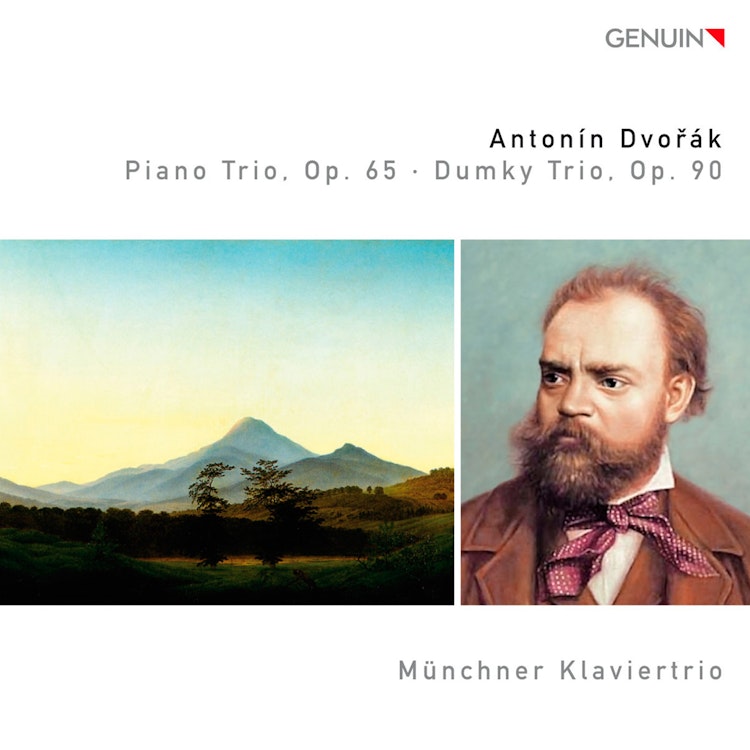
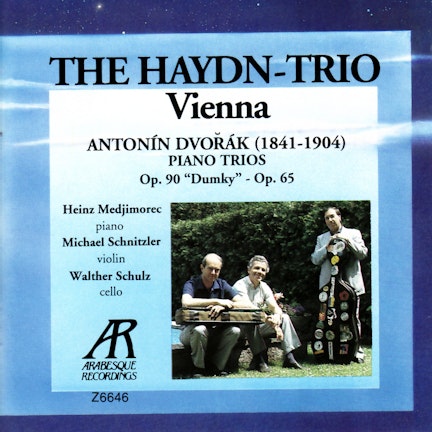
The 'Dumky Trio' in E minor, Op. 90, replaces the traditional four-movement sonata form with six movements, though the first three are merged via 'attaccas'.
Composer's Artistic Vision
Johannes Brahms admired Dvořák's musical inventiveness, stating that Dvořák had more ideas than other composers and that his 'rubbish' could form main themes for others.
Composition History
Dvořák's Piano Trio in F minor, Op. 65, premiered on October 27, 1883, with the composer himself playing the piano part.
Compositional Technique
The 'Dumky' in Dvořák's Trio, Op. 90, are rhapsodic-ballad Ukrainian folk tunes, whose expressive range Dvořák expanded from melancholy to happily relaxed or furiously dancing.
Composer Biography
The Piano Trio in F minor, Op. 65, was composed during a dark period for Dvořák, following his mother's death and the critical reception of his opera 'Dimitrij'.
Compositional Technique
Dvořák revised his Piano Trio in F minor, Op. 65, shortening, condensing, and even reversing the order of the second and third movements to improve its structure and drama.
Performer Biography
The Münchner Klaviertrio (Munich Piano Trio), founded in 1982, is one of Germany's most active and sought-after chamber music ensembles, having toured extensively worldwide.
You might also enjoy...
Smetana / Suk / Novak: Piano Trios
Smetana & Dvořák: The Czech Legacy II
Mendelssohn, Felix: Piano Trios Nos. 1 and 2
Dvořák: Piano Trios
Mendelssohn: Piano Trio in C Minor - Smetana: Piano Trio in G Minor
Mendelssohn & Smetana: Piano Trios
E. Franck: Piano Trios
The Passenger
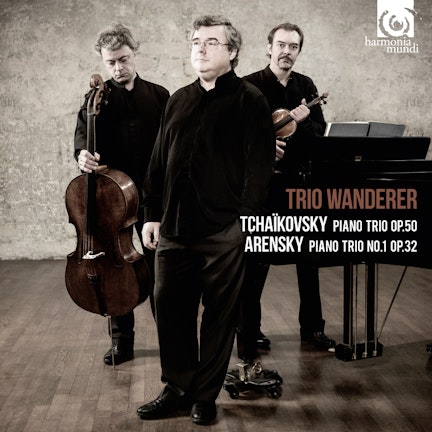
Tchaikovsky & Arensky: Piano Trios
Mendelssohn: Trio No. 1 in D-Moll, Trio No. 2 in C-Moll