Violin accompaniment for harpsichord music, as seen in Edelmann's works, was common practice since Mondonville's Opus III in 1734, aiming to make the harpsichord more perceptible.
Cultural Impact
Edelmann's 'drame lyrique' Ariane dans I'Isle de Naxos was performed many times, even into the early 19th century, allowing figures like Berlioz to hear it.
Composition History
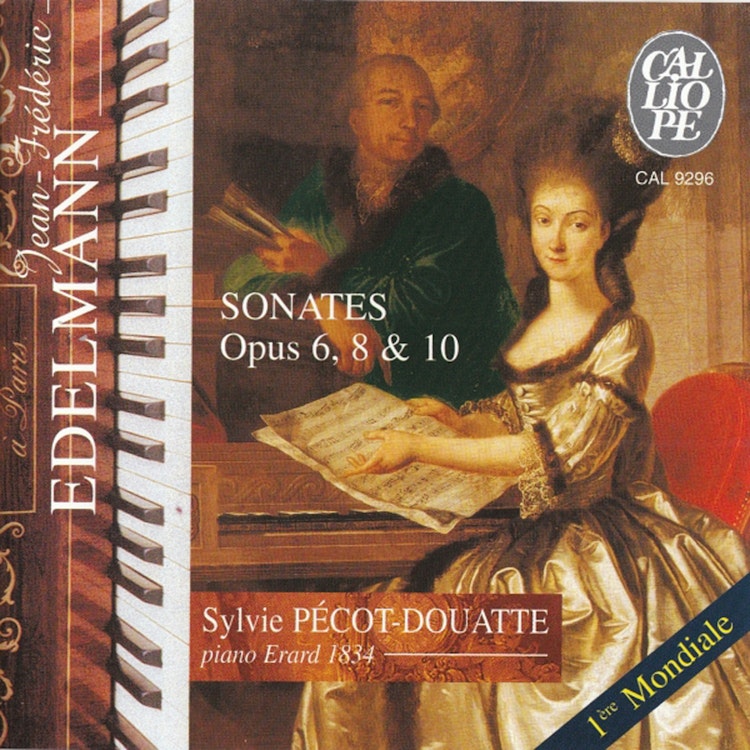
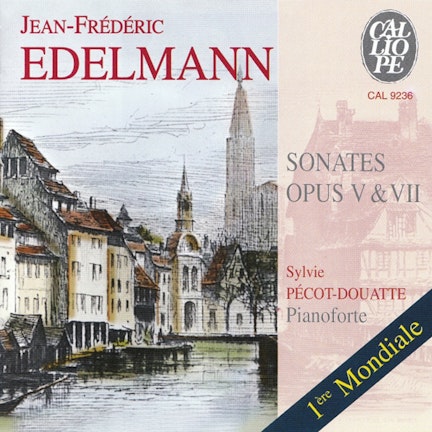
Jean-Frederic Edelmann's Opus VI sonatas were dedicated to Madame de la Guillaummye and published in Paris, Mannheim, and London.
Composer's Artistic Vision
The orchestral and vocal qualities of Edelmann's sonatas reflect his keyboard transpositions of the style and dramatic effects of his friend Gluck, a renowned opera composer.
Compositional Technique
Edelmann's sonata forms often take on a structure close to binary form, with motifs redistributed for dramatic effect, sometimes lacking a full recapitulation.
Instruments
The Andre and Blundell editions of Edelmann's Opus VIII sonatas specify that the pieces can be played on either the forte-piano or the harpsichord.
You might also enjoy...
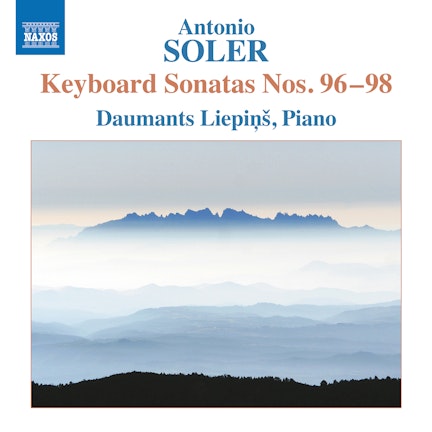
Soler: Keyboard Sonatas, R. 96-98
Cherubini - 6 Piano Sonatas
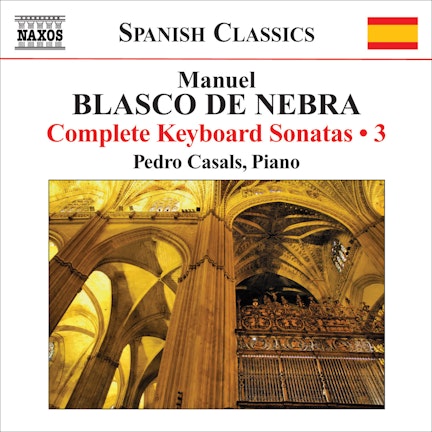
Blasco de Nebra, M.: Complete Keyboard Sonatas, Vol. 3