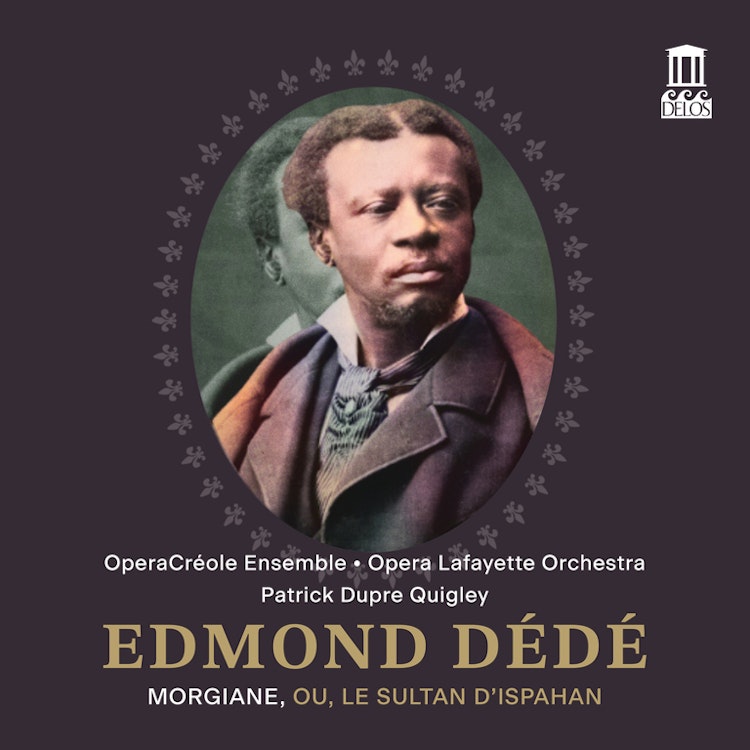
This recording is the world premiere of Morgiane, the earliest complete opera by a Black American composer, Edmond Dédé, which was completed in 1887 but never performed in his lifetime.
Cultural Impact
This opera is significant not only for its beauty but also because it rewrites the story of who shaped the operatic canon, bridging American and French, Black and white, powerful and marginalized worlds.
Composer Biography
Edmond Dédé, born a free man of color in New Orleans, built his career in France after facing white backlash against his community in Louisiana.
Interpretation
For this world premiere recording, the Opera Lafayette Orchestra performed Morgiane on period instruments, including gut-strung violins, mid-nineteenth-century winds, and the now-obsolete ophicleide, to capture Dédé's intended sound.
Historical Context
Despite his talent, Edmond Dédé died in poverty in Paris in 1901, buried in an unmarked grave, and his opera Morgiane vanished with him.
Compositional Technique
Edmond Dédé's Morgiane features rich orchestration, sophisticated structure, dramatic pacing, and comic timing, with vocal writing that combines Italian bel canto elegance with French romanticism and forward-looking energy.
Composition History
The handwritten manuscript of Morgiane, a 545-page score, was discovered in 2008 by a music librarian at Harvard University after the archive was acquired in 2000.
You might also enjoy...
Thomas: Hamlet
Puccini:Turandot
Rossini: Guillaume Tell
Rossini: Sigismondo
Pierne: Cydalise et le Chevre-Pied
Rossini: Eduardo e Cristina
Puccini: Manon Lescaut - The Sony Opera House
Massenet: Thaïs
Antonín Dvorák: Rusalka (Opera) [Highlights] [Sung in German] [Mitzewa]