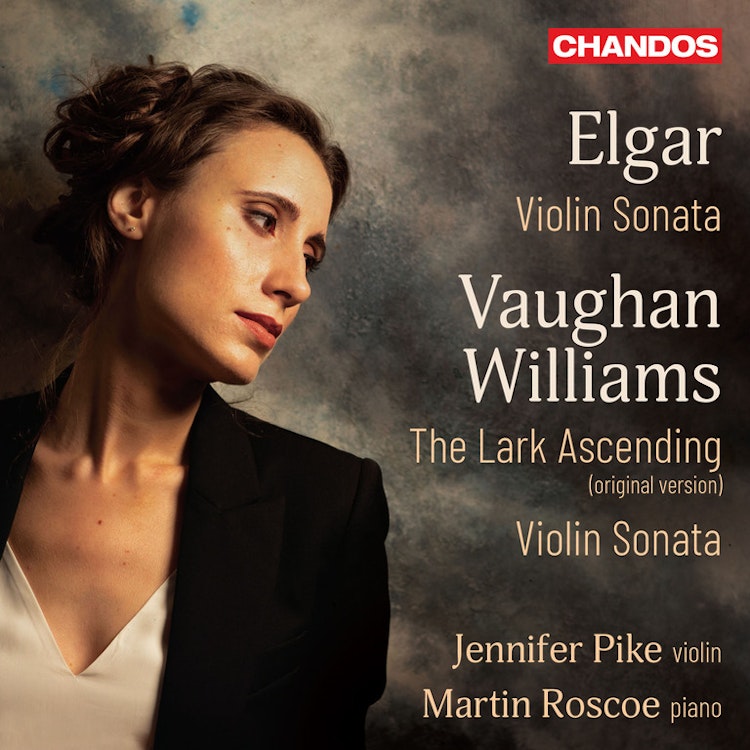
Elgar & Vaughan Williams: Works for Violin & Piano
7/31/2020, 7 Tracks, 1:06:59
Featuring
Jennifer Pike
Martin Roscoe
Edward Elgar
Ralph Vaughan Williams
Did you know?
1/7
Historical Context
The Brinkwells works, including Elgar's Violin Sonata, reflect a 'hollow nostalgia' for the Edwardian world that had perished in the trenches of World War I.
Composer Biography
Sir Edward Elgar, composer of the Violin Sonata in E minor, first considered writing a violin and piano sonata as early as 1887, but only completed one in 1918.
Composition History
Elgar chose to reprise a melody from the Romance movement in the finale of his Violin Sonata as a tribute to his friend Marie Joshua, the sonata's dedicatee, who died unexpectedly.
Composition History
Elgar's Violin Sonata in E minor was one of four masterpieces composed at Brinkwells, his countryside retreat, marking a return of creative power after a period of ill-health.
Composition History
Ralph Vaughan Williams's Violin Sonata in A minor, composed four years before his death, is considered his last major instrumental work.
Critical Reception
The public premiere of Elgar's Violin Sonata in 1919 was met with an 'overwhelming' reception, with the audience roaring and shouting for the composer.
Composer's Artistic Vision
Elgar described his Violin Sonata as 'full of golden sounds' and containing nothing 'violently chromatic or cubist,' suggesting a preference for traditional forms over modernist trends.
You might also enjoy...
Vierne & Franck: Violin Sonatas
Wieniawski / Vieuxtemps / Glazunov / Rachmaninov / Prokofiev / Ernst: Works for Violin and Piano