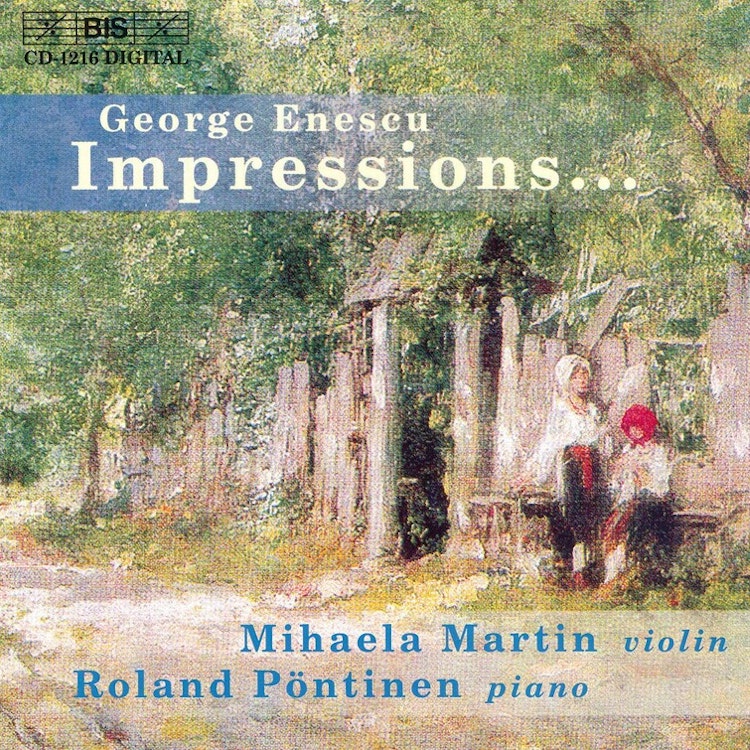
Enescu: Impressions D'Enfance / Violin Sonatas Nos. 2 and 3
1/1/2003, 16 Tracks, 1:13:46
Featuring
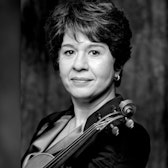
Mihaela Martin
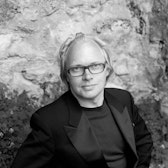
Roland Pöntinen
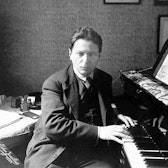
George Enescu
Did you know?
1/7
Performer Biography
Roland Pöntinen, the pianist on this recording, debuted at age 17 with the Royal Stockholm Philharmonic Orchestra and is also a composer, with his work Blue Winter premiered at Carnegie Hall in 1998.
Composition History
Enescu composed his last work for violin and piano, Impressions d'enfance, in 1940 during the Second World War, a genre popular since Schumann's Kinderszenen as a 'reflection of an adult for adults'.
Performer Biography
Mihaela Martin, the violinist on this recording, began playing at age five, won major prizes in Moscow, Montreal, Brussels, and Indianapolis, and made her New York debut at Carnegie Hall.
Compositional Technique
Enescu's Sonata No. 2 for Piano and Violin uses a main theme that occurred to him at age fourteen as a cyclical point of reference, undergoing metamorphoses across all three movements.
Composer Biography
George Enescu, the leading Romanian violin virtuoso, conductor, composer, and musical educator, was Yehudi Menuhin's teacher, chosen for his unorthodox methods and relaxed authority.
Composer's Artistic Vision
Enescu saw his true vocation in composing, not violin playing, and like Béla Bartók, he made significant contributions to the folk music of his native Romania, which also inspired his own works.
Compositional Technique
Enescu's Sonata No. 3 for Piano and Violin, subtitled 'dans le caractère populaire roumain,' uses Romanian folk music as a source for modern stylistic elements like rhapsodic parlando rubato, quarter-tones, and unusual playing techniques.
You might also enjoy...
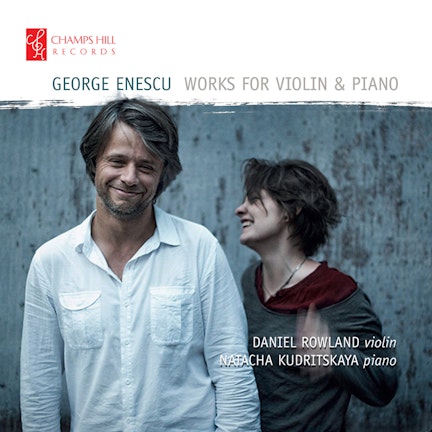
Enescu: Works for Violin & Piano
Enescu: Complete Works for Violin & Piano
Enescu: Violin Sonatas
Enescu: Violin Sonatas Nos. 1-3
Enescu: Works for Violin & Piano, Vol. 1
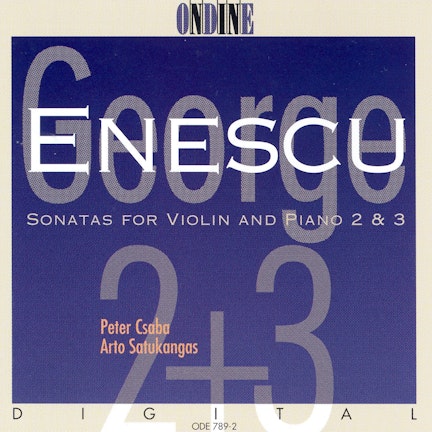
Enescu, G.: Violin Sonatas Nos. 2 and 3
George Enescu: Works for Violin & Piano
Enescu: Sonatas for Violin and Piano, Opp. 2, 6, and 25