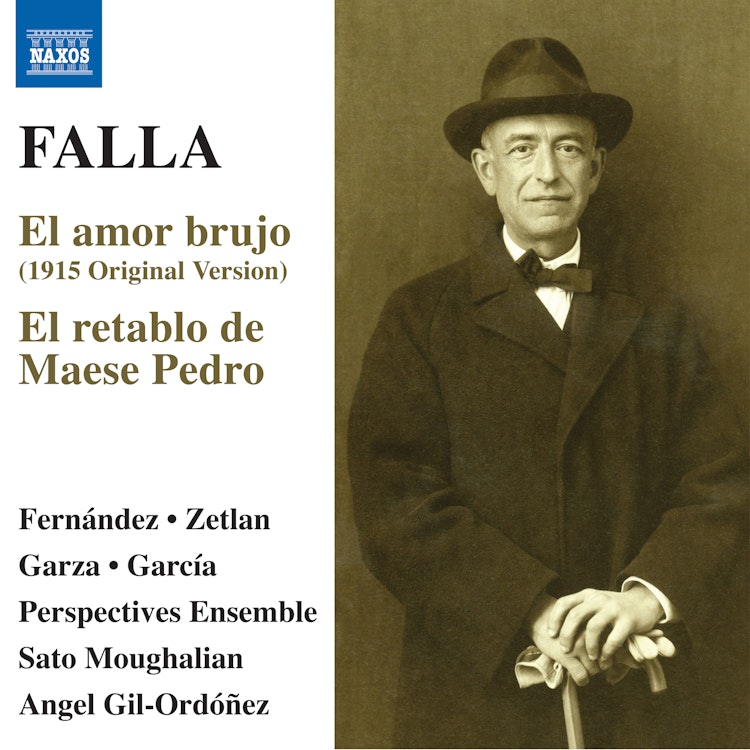
Falla: El amor brujo (1915 Version) & El retablo de maese Pedro
5/10/2019, 26 Tracks, 1:02:00
Featuring
Angel Gil-Ordóñez
Esperanza Fernández
Jorge Garza
Jennifer Zetlan
Alfredo García
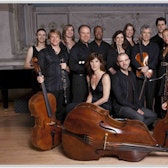
Perspectives Ensemble
Manuel de Falla
Did you know?
1/7
Instruments
For El retablo de Maese Pedro, Falla included a harpsichord, played at the premiere by Wanda Landowska, who was championing a revival of that instrument.
Composition History
Falla's El amor brujo was originally conceived as a 'gitanería in two acts' for the acclaimed Romani flamencista Pastora Imperio, with songs, spoken passages, and dancing.
Critical Reception
The 1915 premiere of El amor brujo met with critical failure in Spain, with reviewers deriding its characteristic Roma rituals of purification as 'not very Spanish'.
Composer's Artistic Vision
Manuel de Falla, one of the greatest Spanish composers of the early 20th century, believed that inspiration for folkloric music must be drawn directly from the people.
Composition History
El retablo de Maese Pedro was commissioned in 1918 by heiress Winnaretta Singer, the Princesse de Polignac, for her celebrated marionette theatre in Paris.
Compositional Technique
In El amor brujo, Falla notated the vocal part for Candelas with inflections and ornaments typical of a cantaor, requiring a flamenco singer grounded in cante jondo ('deep song').
Recording & Production
The version of El amor brujo heard on this release was reconstructed in 1986 by musicologist Antonio Gallego, based on Falla's 1915 notes and sketches.
You might also enjoy...
Schubert: Alfonso und Estrella, D. 732
Verdi: La forza del destino
Mozart: Così fan tutte (Thus Do They All), K. 588 (Recorded 1956)
Puccini: Turandot
Verdi: I vespri siciliani
Charpentier: La descente d'Orphée aux enfers, H. 488