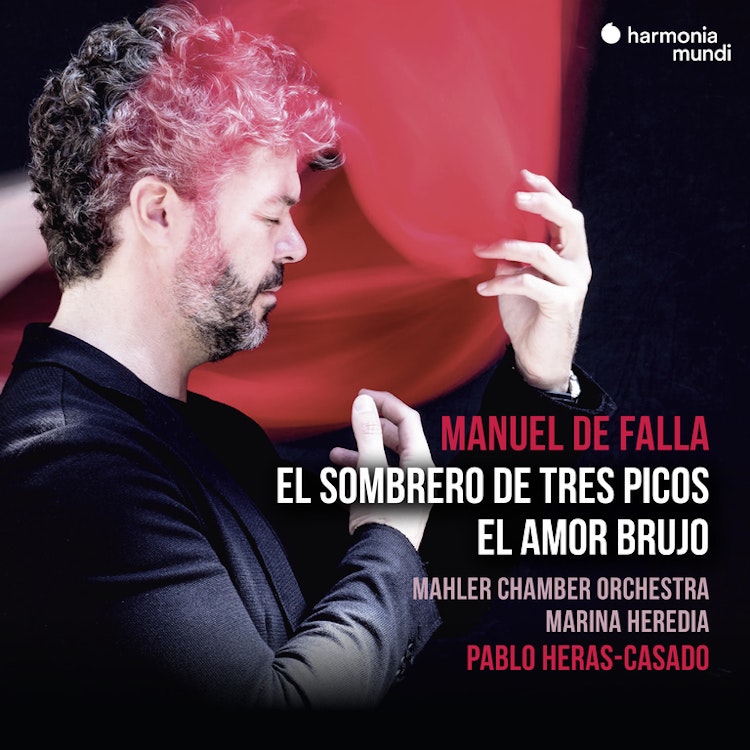
Manuel de Falla's two classic ballet scores, El sombrero de tres picos and El amor brujo, are recorded by Pablo Heras-Casado and the Mahler Chamber Orchestra on the 100th anniversary of the premiere of El sombrero de tres picos in 1919. These two vivid, flamenco-infused works feature songs performed by mezzo-soprano Carmen Romeu and cantaora Marina Heredia.
Featuring
Pablo Heras-Casado
Carmen Romeu
Marina Heredia Ríos
Mahler Chamber Orchestra
Manuel de Falla
Did you know?
1/7
Compositional Technique
In 'El amor brujo', Manuel de Falla used a small instrumental group of fifteen musicians, treated in the spirit of a soloist ensemble, showcasing an economy of resources.
Composition History
Serge Diaghilev, director of the Ballets Russes, proposed that Manuel de Falla create a ballet based on 'El corregidor y la molinera', which became 'El sombrero de tres picos' (The three-cornered hat).
Compositional Technique
In 'El sombrero de tres picos', Manuel de Falla uses specific themes and instrumental colors to characterize the protagonists, such as the English horn for the Miller and the bassoon for the Corregidor.
Composer's Artistic Vision
For 'El amor brujo', Manuel de Falla aimed to deeply penetrate the soul of 'cante jondo', an ancient musical form that conveys echoes of multiple cultures.
Composition History
Between late 1914 and 1919, ten of the eleven compositions in Manuel de Falla's catalogue resulted from his collaboration with Gregorio and María Martínez Sierra.
Composer Biography
Manuel de Falla's return to Madrid in August 1914, due to the outbreak of World War I, coincided with the start of his intense collaboration with the Martínez Sierra couple.
Composition History
The great flamenco singer and dancer Pastora Imperio suggested to Manuel de Falla and María Martínez Sierra that they write the music and libretto for 'El amor brujo' (Love the magician).
You might also enjoy...
Shostakovich: The Lady and the Hooligan - Ballet Suite No. 2
Shostakovich Film Series: The Lady and the Hooligan & Ballet Suite No. 2
Tishchenko: The Twelve
Leningrad Ballet Music
Prokofiev: Romeo and Juliet (Excerpts) Stravinsky: The Rite of Spring
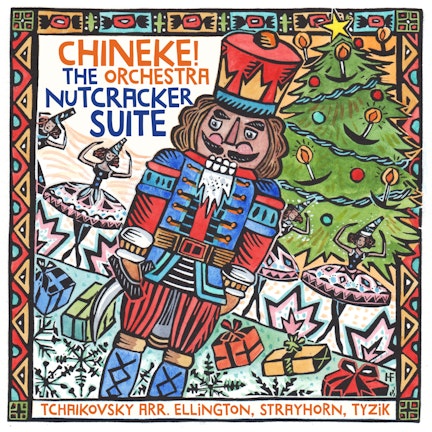
Tchaikovsky: Swan Lake; The Nutcracker
Stravinsky: Pétrouchka
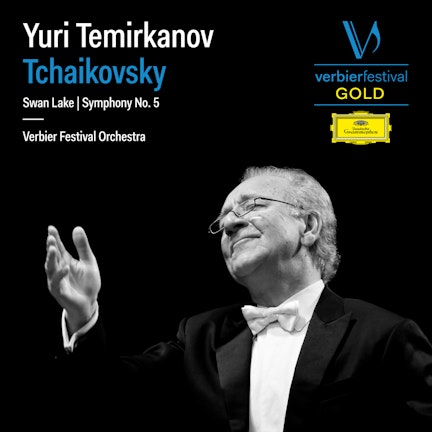
Tchaikovsky: Swan Lake (highlights)
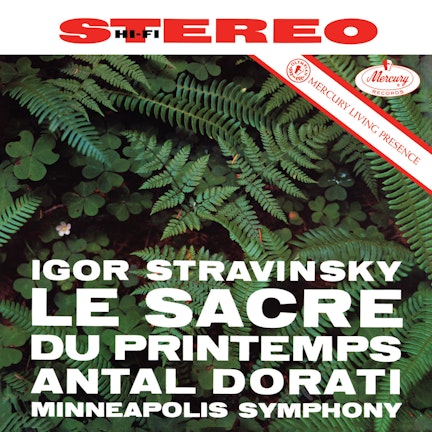
Stravinsky: Le Sacre du printemps (The Rite of Spring)