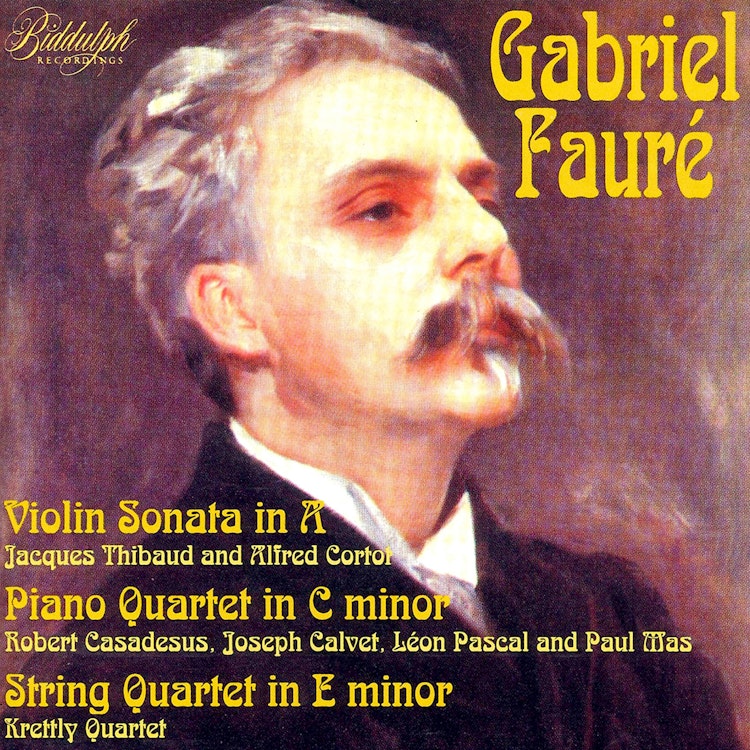
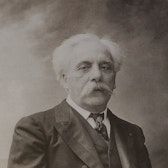
Gabriel Fauré, a founding father of 20th-century French music, primarily focused on intimate-scale compositions like songs, solo piano music, and chamber music, rather than orchestral works.
Critical Reception
The Berceuse ('Lullaby'), Op.16, was so popular that it kept Fauré's name linked to 'salons' for too long, despite its unwitting perfection elevating it beyond mere salon works.
Composition History
Fauré completely rewrote the finale of his First Piano Quartet after its first performance in 1880, making the last movement its unquestionable high point.
Composer Biography
Fauré's Violin Sonata in A major, Op.13, was a significant milestone in his career, creativity, and emotional life, written when he was 31.
Composer Biography
Fauré was 78 and in poor health when he composed his String Quartet, and completing its finale largely exhausted him, leading directly to his final illness.
Composition History
The Violin Sonata in A major, Op.13, Fauré's first major chamber work, was printed by Breitkopf und Härtel thanks to the intervention of his ally, businessman Camille Clerc.
Composition History
Fauré's String Quartet in E minor, Op.121, was his last composition, and he expressed nervousness about attempting the genre, noting that even Saint-Saëns, his teacher, struggled with it.
You might also enjoy...
D'Alay: 12 Violin Concertos, Op. 1
Entre 2
Entre 2 (Version Collector)
Michael Gordon: Clouded Yellow
The Bell Telephone Hour Recordings, Vol. 2: Concertos by Corelli, Dvořák & Others (Live) [Remastered 2022]
Leonarda: A Portrait of Isabella Leonarda
Janoska Style
Love From King's
From Windsor with Love
Friar Alessandro: O Holy Night
L'arbre de mai: Chansons & danses au temps de Guillaume Dufay