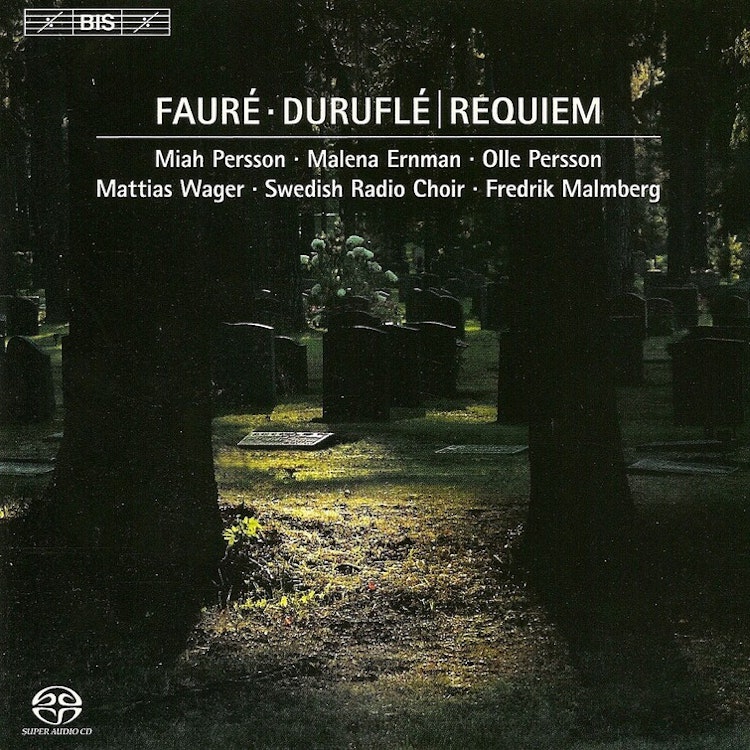
At a partial premiere of Fauré's Requiem in 1888, a priest at the Madeleine Church in Paris reportedly disliked the new work, stating, 'Monsieur Fauré, we don't need all these novelties'.
Compositional Technique
Duruflé's Requiem is composed entirely on religious themes from the requiem mass, incorporating plainchant in non-measured rhythm, sometimes with modal harmonies or contrapuntal treatment.
Composer's Artistic Vision
Both Fauré's and Duruflé's Requiems reject the theatricality and pomp often associated with the Mass for the Dead, instead expressing a 'trust in the eternal rest'.
Composition History
Gabriel Fauré stated that his Requiem was composed 'for no reason... just for pleasure', rather than as a reaction to his father's death.
Compositional Technique
Both Fauré's and Duruflé's Requiems omit the 'Dies irae' movement, which traditionally depicts the Last Judgment, contributing to their intimate and calm character.
Compositional Technique
Both Fauré and Duruflé assign the 'Pie Jesu' movement to a solo female voice and the 'Hostias' passage and 'Libera me' to a baritone, with other movements for choir.
Composer Biography
Maurice Duruflé, whose career spanned the 20th century, studied with notable figures like Eugène Gigout (organ), Paul Dukas (composition), and Olivier Messiaen at the Paris Conservatoire.
You might also enjoy...
Burgon: Requiem; Nunc dimittis
Fauré: Messe de Requiem; Cantique de Jean Racine
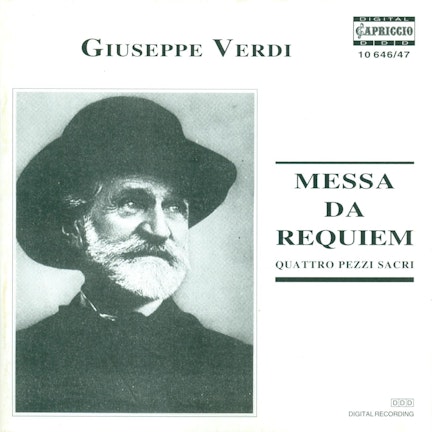
Verdi: Requiem - Quattro Pezzi Sacri
Fredrik Sixten - Requiem
Verdi: Requiem; 4 Sacred Pieces
Verdi, G.: Messa Da Requiem
Verdi: Requiem; Quattro pezzi sacri
Verdi: Messa da Requiem - 4 Pezzi sacri
Verdi: Requiem/Quattro Pezzi Sacri
George Lloyd: Requiem and Psalm 130
Verdi: Requiem/Quattro Pezzi Sacri
Penderecki: Te Deum - Lacrimosa
Choral Concert: St. John's College Choir - Langlais, J. / Orr, R. / Tippett, M. / Howells, H. / Hoddinott, A.