Unlike Debussy's 'snapshot' approach to water, Fauré's barcarolles represent a continuous flow, embodying the philosophical concept of 'panta rei' (everything flows).
Compositional Technique
Fauré's barcarolles are characterized by his persistent use of arpeggios, which he saw as a musical symbol of liquidity, depicting the wake of a boat on water.
Composer's Artistic Vision
The later barcarolles, like the Nocturnes, reflect the inexorable advance of age and a sense of loss, with the music becoming more sparse and economical.
Composer Biography
Fauré's tragic experience with deafness, which occurred between the Sixth and Seventh Barcarolles, played a role in the evolution of his musical language.
Composer's Artistic Vision
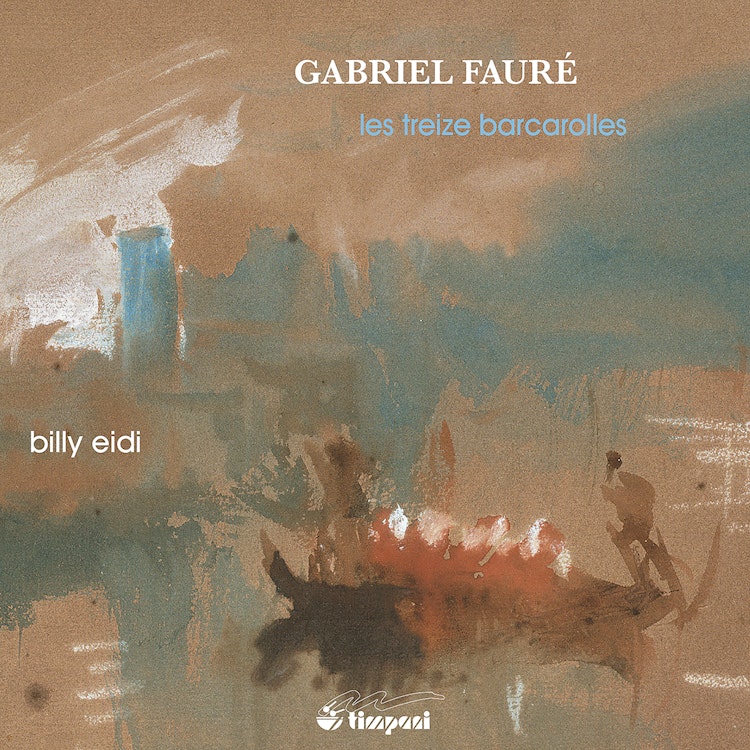
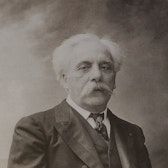
Gabriel Fauré dedicated 13 barcarolles, spanning 40 years of his life, to the genre, renewing it from an anecdotal form to a universal one.
Compositional Technique
Fauré's barcarolles evolve from depicting peaceful lake scenes to more violent, high-seas imagery, and later to a more introspective and melancholic character.
You might also enjoy...
Faure: Barcarolles
En dehors
Takashi Yoshimatsu: Piano Works for the Left Hand
For Mattia
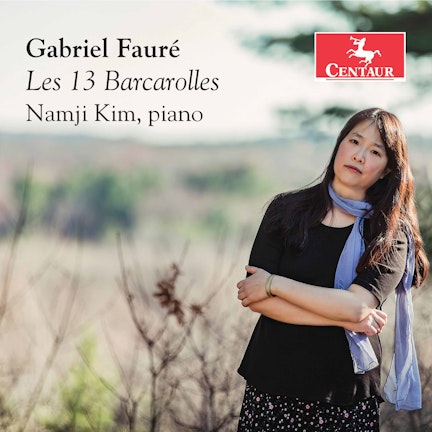
Fauré: 13 Barcarolles
Antoni Kątski: Meditations
Samazeuilh: Complete Piano Works
Fanny Mendelssohn: Das Jahr
Fauré: 13 Barcarolles
Breiner: Mornings, Evenings and Late Nights – Calm Romantic Piano Music, Vol. 3