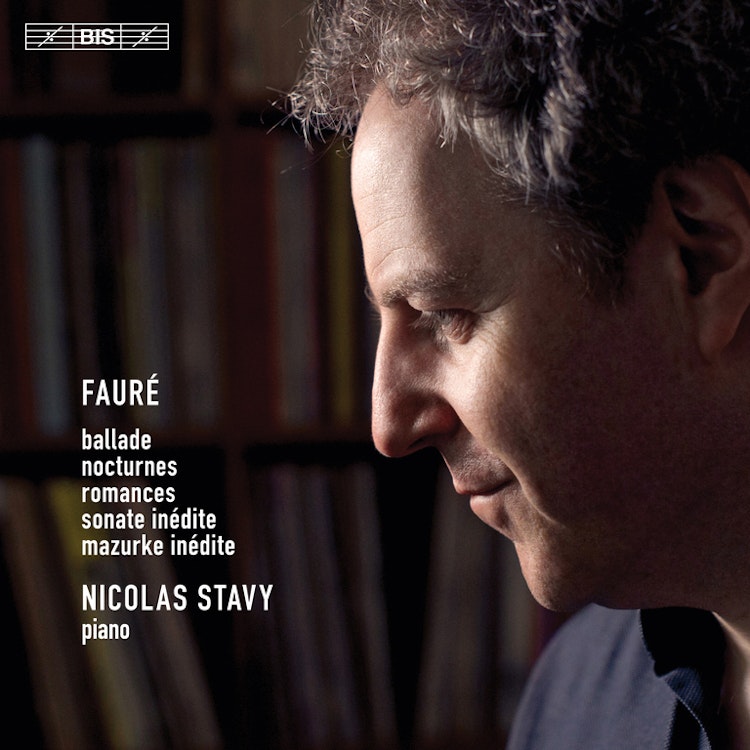
Two of the works on this album, the Sonata, N.5 and Mazurke, N.8, are world premiere recordings, having been previously unpublished.
Compositional Technique
The Sonata, N.5 by Fauré, possibly a teaching piece or exercise, adopts a musical style from the turn of the 18th/19th centuries, with movements potentially imitating Mozart, Beethoven, and Haydn.
Composition History
Fauré's Sonata, N.5, dated April 6, 1863, was never intended for publication by the composer, who considered its style too imitative of earlier masters.
Composer's Artistic Vision
Fauré once replied to a persistent question about where he conceived his Sixth Nocturne, Op. 70, with 'In the Simplon Tunnel,' indicating his belief that no visual image could capture the work's profundity.
Composer Biography
Gabriel Fauré's early piano pieces, including the Sonata, N.5 and Mazurke, N.8, were written during his studies at the École de musique classique et religieuse, founded by Louis Niedermeyer.
Critical Reception
When Fauré presented his Ballade, Op. 19 to Franz Liszt, Liszt initially struggled to sight-read it, famously remarking, 'I haven't got enough fingers,' which testifies to the music's demanding nature.
Cultural Impact
A broad introduction from Fauré's Ballade, Op. 19, was one of the sources for Vinteuil's famous 'little phrase' in Marcel Proust's novel 'À la recherche du temps perdu' (In Search of Lost Time).
You might also enjoy...
Field: Sonatas & Nocturnes
Kalliwoda: Piano Music
Comellas: Piano Works
Fauré: Piano Music
Brahms: Complete Piano Sonatas
Chopin of Armenia: Stephan Elmas
Dvořák, Grieg & Brahms: Music for Piano Four Hands