Fauré: Requiem; Cantique de Jean Racine; Messe basse; 2 Motets, Op. 65
7/28/2023, 14 Tracks, 58:12
Featuring
Matthew Best
Mary Seers
Michael George
John Scott
Isabelle Poulenard
Celia Jackson
Janet Coxwell
Jenny Youde
English Chamber Orchestra
Corydon Singers
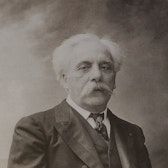
Gabriel Fauré
Did you know?
1/7
Composer Biography
Fauré trained as a church musician at the École Niedermeyer in Paris, receiving a thorough grounding in plainsong and modal harmony.
Composition History
The majority of Gabriel Fauré's Requiem was composed after the death of his mother on December 31, 1887.
Recording & Production
This recording uses the 1893 version of Fauré's Requiem, which is considered the most convincing compromise among the three completed versions.
Composer's Artistic Vision
Fauré viewed death as a gentle release from earthly life, which led him to almost disregard the horrors of the Day of Judgment in his Requiem.
Compositional Technique
Unlike many other Requiems, Fauré's serene masterpiece significantly reduces the lengthy 'Dies irae' ('Day of wrath') sequence, which is a cataclysmic eruption in Berlioz's work.
Composition History
The Messe Basse, a joint endeavor by Fauré and André Messager (known for his ballet Les deux pigeons), had a more complicated genesis than the Requiem.
Critical Reception
Despite Francis Poulenc's dismissive remark that it was 'one of the few things I hate in music', Fauré's Requiem is indisputably his most popular work.
You might also enjoy...
Willan: In the Heavenly Kingdom
Vierne, Poulenc, Langlais & Messiaen: French Sacred Choral Works
Poulenc / Faure / Debussy / Saint-Saens: Songs
Harris, William: Choral Music
Respighi: Lauda per la Natività del Signore, P. 166
Ottorino Respighi: Lauda per la Natività del Signore
Bluebird - Music Of Contemplation
Musica sacra, Vol. 9
Rheinberger: Missa et Motetti
Motetten. Von Heinrich Schütz bis Fritz Werner
Bruckner: Mass in E Minor; Strauss,R.: Deutsche Motette
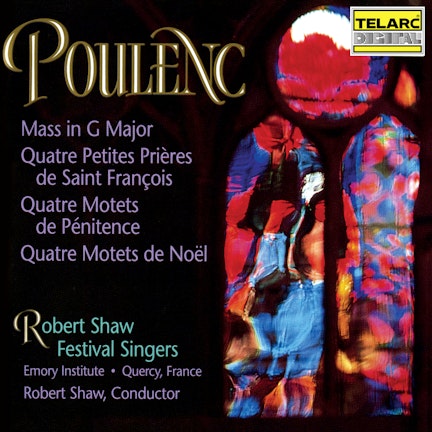
Poulenc: Mass in G Major, Motets for Christmas and Lent & Four Short Prayers of Saint Francis
Stanford: Anthems and Services
Poulenc: Mass in G; Motets for Christmas & Lent etc.