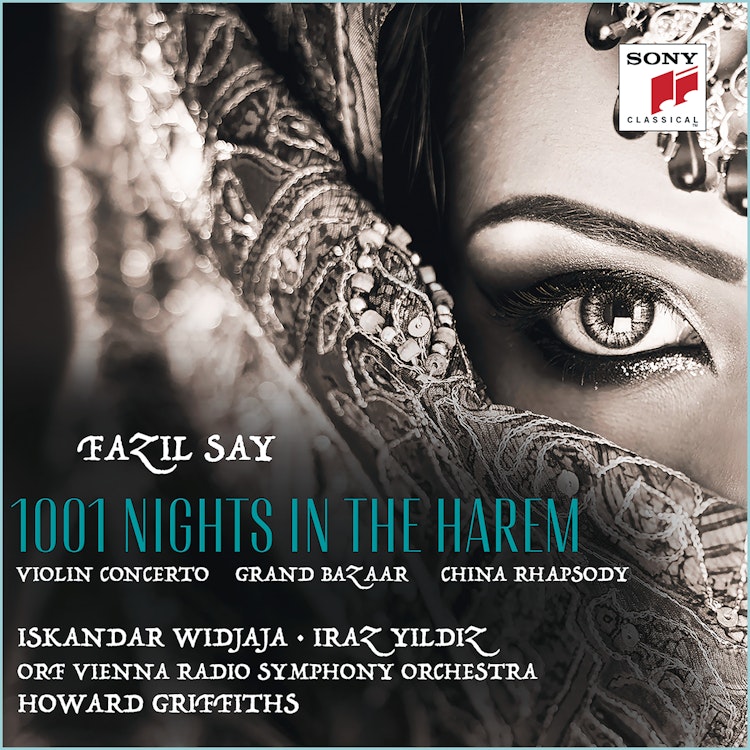
Fazil Say: 1001 Night in the Harem, Grand Bazar, China Rhapsody
2/22/2019, 6 Tracks, 51:39
Featuring
Howard Griffiths
Iskandar Widjaja
Iraz Yildiz
ORF Radio-Symphonieorchester Wien
Fazil Say
Did you know?
1/7
Compositional Technique
In Fazil Say's "China Rhapsody," the piano is transformed into a guzheng, a traditional Chinese instrument, by placing a pencil on its strings.
Composer Biography
Howard Griffiths, the conductor, first heard about Fazil Say as an "incredibly gifted boy" from Say's teacher Mithat Fenmen in the 1970s, before meeting him two decades later.
Performer Biography
Iskandar Widjaja plays a Stradivarius Stephens from 1690 and a JB Vuillaume from 1875.
Recording & Production
This album features two world premiere recordings: Fazil Say's "GRAND BAZAAR" and "CHINA RHAPSODY."
Composer's Artistic Vision
Fazil Say, the composer, combines Western and Eastern elements in his compositions and incorporates ideas from other musical styles like jazz.
Performer Biography
Iskandar Widjaja, the violinist, is of Arab/Dutch and Chinese/Indonesian descent and has a career in both classical music and show business.
Interpretation
Iskandar Widjaja, the violinist, describes learning Fazil Say's Violin Concerto "1001 Nights in the Harem" as like learning a new language, requiring him to expand his spectrum of tone colour.
You might also enjoy...
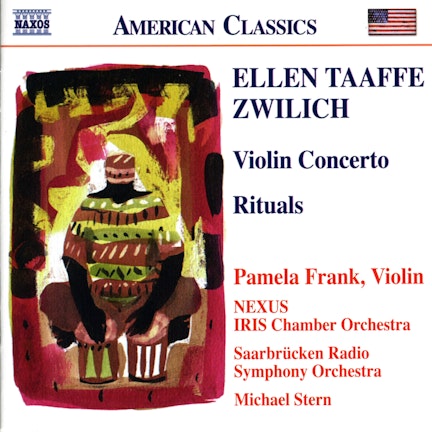
Zwilich: Violin Concerto / Rituals
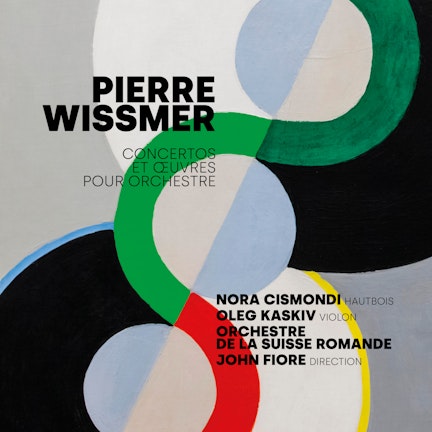
Pierre Wissmer, Concertos et Œuvres orchestrales
Kalliwoda: Violin Concertinos & Overtures
John Williams: A Life In Music
The Sound of Adventure
Adam's Apple
Ryu, Jeajoon: Sinfonia Da Requiem / Violin Concerto No. 1
Shostakovich: New Babylon / A Year Is Like A Lifetime Suite
Continuum: Modern Orchestral Works
A Symphonic Celebration - Music from the Studio Ghibli Films of Hayao Miyazaki