Leopold I, the composer, was not originally intended to be emperor; his elder brother Ferdinand IV was the natural heir but died unexpectedly of smallpox in 1654.
Historical Context
Leopold I's 47-year reign was marked by wars with Louis XIV, the threat from the Turks, the War of Spanish Succession, and the rebuilding of the empire after the Thirty Years War.
Compositional Technique
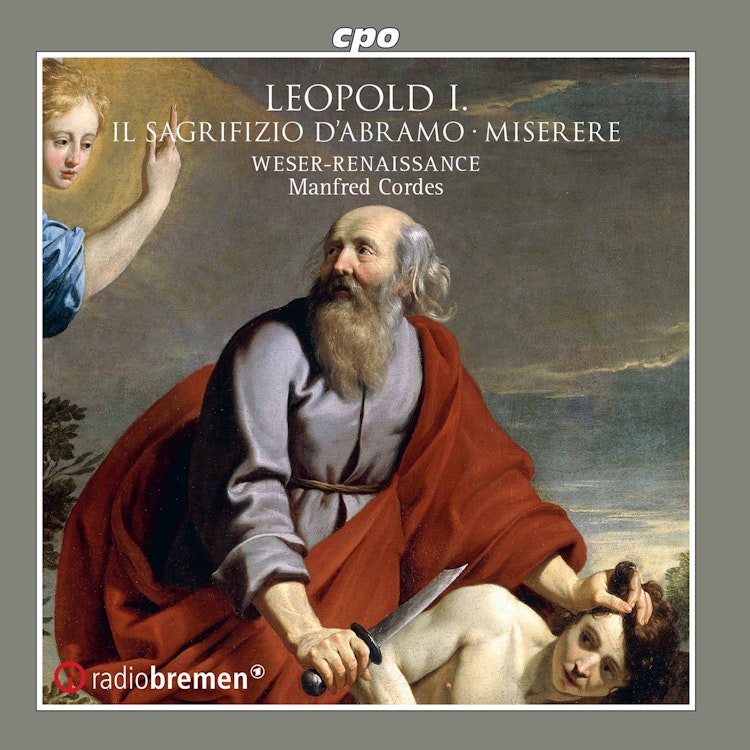
In his oratorio Il Sagrificio d'Abramo, Leopold I uses allegorical figures like Obedience and Humanity as Abraham's companions to dramatically portray his moral conflict.
Compositional Technique
Leopold I's Miserere for Holy Week features an unusual instrumentation consisting entirely of string instruments and a systematic formal design where soloists and strings alternate verse by verse.
Cultural Impact
Under Emperor Leopold I, the court chapel became one of Europe's most important musical ensembles, laying the foundation for what is now known as the Viennese classical tradition.
Composition History
The oratorio was introduced to Vienna in 1651 by Eleonora of Gonzaga, the third wife of Ferdinand III, who established musical performances during fasting periods as a regular institution.
Compositional Technique
Leopold I's oratorio Il Sagrificio d'Abramo is notable for being the first libretto to describe Isaac as a prefiguration of Christ, adding a new layer of meaning previously only found in iconography.
You might also enjoy...
Eugen Jochum - The Choral Recordings on Philips
Gounod: Tobie / Gallia
Gounod: Tobie / Gallia
Schütz: Historia der Geburt Jesu Christi, SWV 435 & Historia der Auferstehung Jesu Christi, SWV 50
Easter
Cheryl Studer - Ave Maria
Vom Himmel hoch, da komm ich her: Weihnachstkonzerte aus Leipzig (Live)