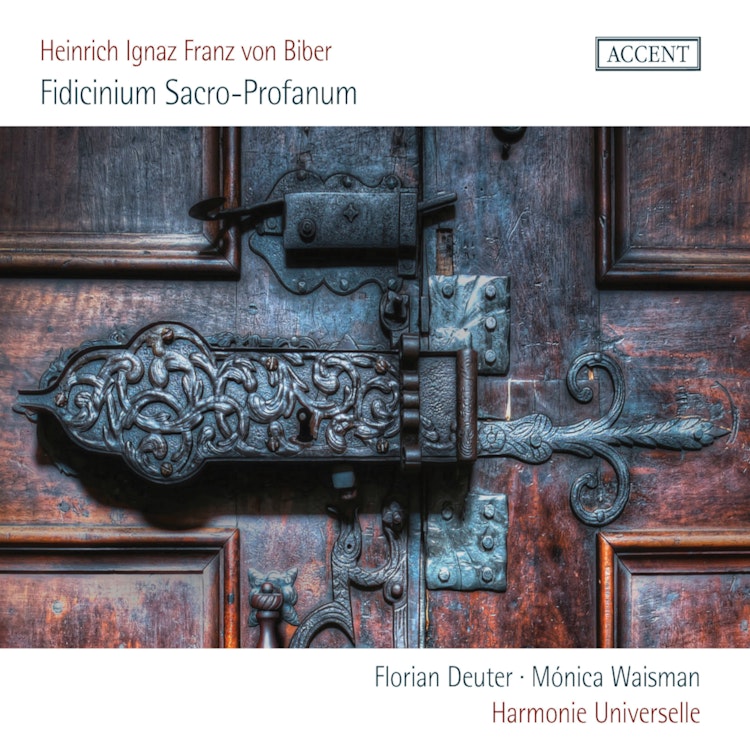
The Fidicinium sacro-profanum includes sonatas for violin and two violas, which are essentially string quartets with basso continuo harmonies, where Biber occasionally animates upper voices into concert dialogues.
Historical Context
Georg Muffat, an outstanding organist and harpsichordist, was employed as cathedral organist and valet at the Salzburg court during the time Biber's Fidicinium Sonatas were created.
Composition History
Biber dedicated his Fidicinium sacro-profanum, a collection of string ensemble music, to Maximilian Gandolph von Kuenburg, the Prince-Archbishop of Salzburg, whom he called his "great Apollo" and "highest patron of music and the muses."
Compositional Technique
The first six sonatas of Biber's Fidicinium sacro-profanum require two violins and two violas, creating a warm, contrapuntally dense five-part texture that was standard for ensemble music in the late 17th century.
Recording & Production
The organ used in this recording, located in the former monastery church of Niederehe, is likely the earliest work by Balthasar König and was built in 1714 with nine manual stops and a coupled pedal.
Composer's Artistic Vision
Biber's Fidicinium sacro-profanum showcases his compositional imagination through a kaleidoscope of colorful motifs and a unique bittersweet melancholic transition into exuberant dance movements.
Composer Biography
Heinrich Ignaz Franz Biber, born in Bohemia, was an exceptional violinist, with only his presumed teacher, Johann Heinrich Schmelzer, rivaling him north of the Alps.
You might also enjoy...
Bach: Sonatas for Violin and Continuo; and works by Schmelzer, Schenk, Böhm and Erlebach
Stamitz: Symphonies, Op. 3 Nos. 1 & 3-6
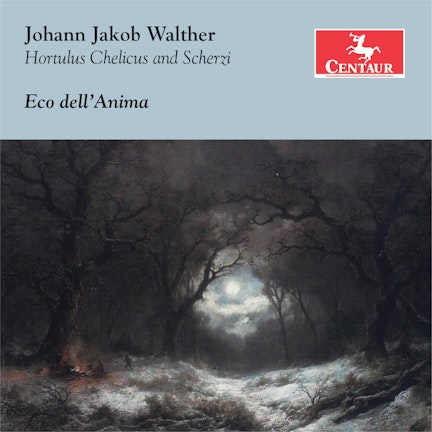
Walther: Hortulus Chelicus & Scherzi
Demachi: Chamber Music
Fux, J.: Overture in D Major / Le Dolcezze, E L'Amerezze Della Notte / Intrada in C Major / Suite in C Major
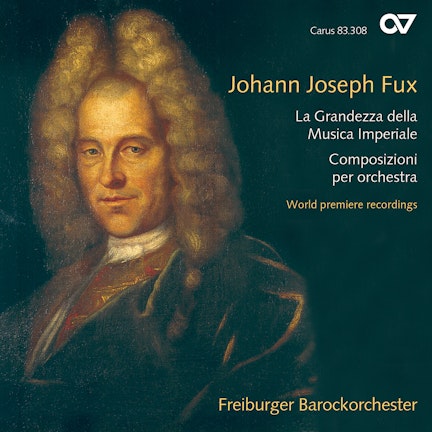
Johann Joseph Fux: La Grandezza della Musica Imperiale. Composizioni per orchestra
Music of Tibor Serly
Heinsius: Symphonies Nos. 1-6 - Lentz: Concertos Nos. 1 & 2 for Harpsichord and Strings
Tomás Bretón: Las 3 sinfonías
Aufschnaiter: Serenades
Lawes: Royall Consort Suites Nos. 1-10
Trumpet Music - Handel, G.F. / Bach, J.S. / Purcell, H. / Stradella, A. / Vivaldi, A. / Biber, H.I.F. / Torelli, G. / Schmelzer, J.H.
Die Deutsche Schalmey ou La naissance du hautbois baroque