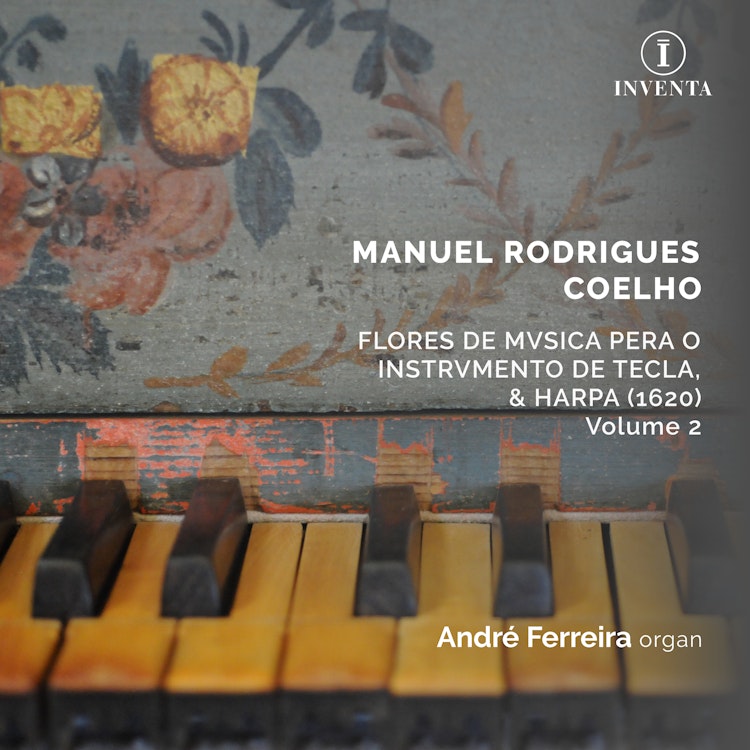
Flores de Musica pera o Instrumento de Tecla, & Harpa, Volume 2
9/22/2023, 51 Tracks, 1:00:44
Featuring
Maria Bayley
André Ferreira
Ars Lusitana
Anonymous (Gregorian Chant)
Manuel Rodrigues Coelho
Anonymous
Did you know?
1/7
Composer's Artistic Vision
Coelho's Flores de Musica was intended for both professional organists as a repository of useful pieces and as a didactic source for those learning organ and its liturgical role.
Composition History
Flores de Musica is one of the largest music works printed in the seventeenth century, containing over five hundred pages, including twenty-four tentos, one hundred versets, and four Susanas.
Composition History
Coelho's Flores de Musica pera o Instrumento de Tecla, & Harpa, printed in Lisbon in 1620, is his only known work.
Composer Biography
Manuel Rodrigues Coelho (c.1555-c.1635) was an organist in his hometown of Elvas, in Badajoz (Spain), and later at the Royal Chapel in Lisbon.
Interpretation
The recording aims to place each verse and tento from Flores de Musica into a semblance of its liturgical context, guided by historical treatises and the music itself.
Interpretation
The performers on this album used a new edition of Coelho's work, curated by João Vaz, which was prepared for the 400th anniversary of its original publication.
Compositional Technique
Flores de Musica is written in open score format, making it the first volume of its kind printed in Portugal, unlike other Iberian works that used numbered tablature.
You might also enjoy...
Dans la montagne: No. 2, La Route
Pater Noster: A Choral Reflection on the Lord's Prayer
Historia de Compassione Mariae (Marian Office, Hamburg, 15th Century)