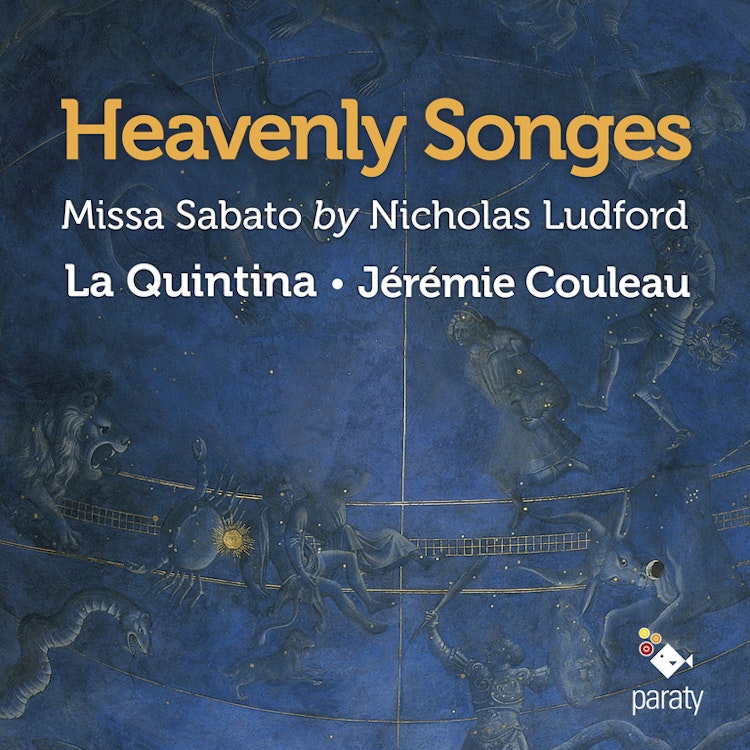
The Missa Sabato, one of Ludford's Lady Masses, uses a unique 'square' (a type of cantus firmus) in the mode of F as its guiding theme, which has not been found in any other musical source.
Compositional Technique
The Lady Masses are notable for their 'alternatim' structure, where sections for a soloist alternate with sections of three-part polyphony.
Composition History
Ludford's Lady Masses, dedicated to the Virgin Mary, were likely intended for performance in the smaller chapels of large ecclesiastical institutions.
Composer Biography
Nicholas Ludford (ca. 1490-1557) spent his entire career in Westminster, London, serving in various musical and ecclesiastical roles at St Stephen's Royal Chapel and St Margaret's parish church.
Instruments
The organetto, a small portable organ, was chosen for this recording because it was still used in the Renaissance to accompany polyphonies in chapels dedicated to the Virgin Mary, particularly during the Anglican Reformation.
Interpretation
This recording addresses the 'problem' of the bare 'square' melodies in Ludford's alternatim masses by improvising counterpoints in the style of 'cantus super librum' for voice and organetto.
Composer's Artistic Vision
In the Credo, Nicholas Ludford systematically links specific melodic fragments from the 'square' to texts referring to the birth of Jesus or God the Son, and other fragments to verses about God the Father or the Holy Spirit, reflecting a Trinitarian division.
You might also enjoy...
An Old Hall Ladymass
Remember Me, My Dear
Hildegard of Bingen: Choral Music (Voices of Ascension)
Sacred North
Notre-Dame - Cathédrale d'émotions
Christmas in Puebla
En Albion: Medieval Polyphony in England
Nowell synge we bothe al and som
Ave Maria
Resurrexi!: Easter in Vienna with Mozart & the Haydn Brothers
When Sleep Comes: Evening Meditations for Voices & Saxophone