Liszt retired from his restless virtuoso life in 1848, settling in Weimar, a town associated with Goethe, where he became 'Kapellmeister-in-Extraordinary'.
Composer Biography
In his later years, Liszt became more radical as a composer, moving closer to the Roman Catholic Church and developing an austere style that explored the dissolution of tonality.
Recording & Production
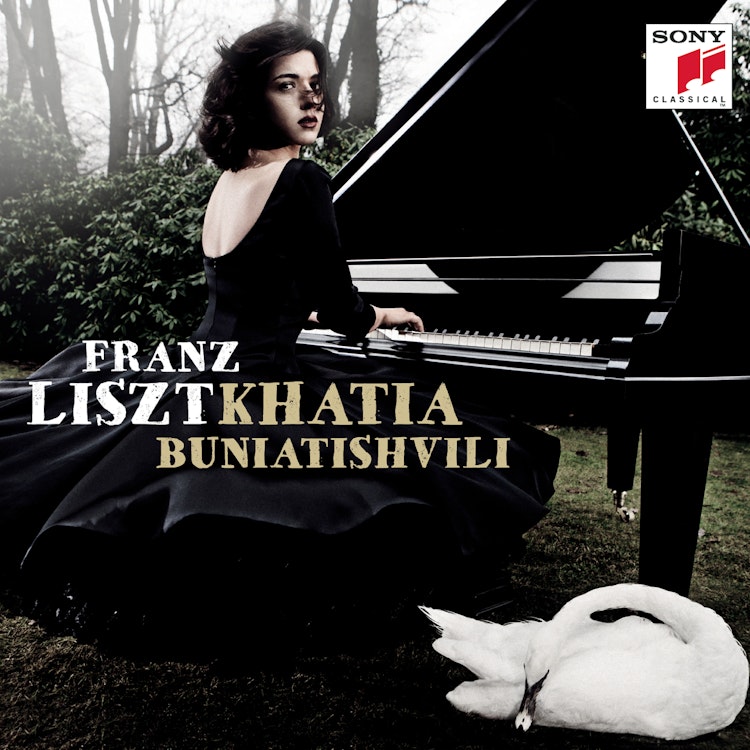
This album was co-produced with BBC Radio 3, and Khatia Buniatishvili is a member of BBC Radio 3's New Generation Artists scheme.
Composer Biography
Franz Liszt's life is described as a "classical tragedy" in five acts, encompassing roles such as a child prodigy, pop star, virtuoso, and a God-fearing abbé.
Compositional Technique
The First Mephisto Waltz by Liszt is based on a poem by Nikolaus Lenau, not Goethe's Faust, and features sharp staccato chords, scales, and sudden harmonic shifts to depict a devilish dance.
Composition History
During his time in Weimar, Liszt turned the town into a leading musical center, conducting premieres of Wagner's operas and works by Berlioz and Donizetti.
Composer's Artistic Vision
Liszt's B minor Sonata, written in 1852-53, is a single-movement work that integrates five different themes with kaleidoscopic brilliance, challenging later composers like Arnold Schoenberg.
You might also enjoy...
Franz Liszt
Exclusive: International Franz Liszt Piano Competition – First Prize Alexander Ullman (2017)
Liszt: Piano Recital
Liszt - My Piano Hero
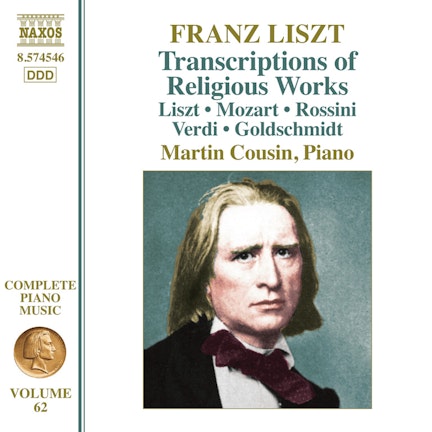
Liszt: Complete Piano Music, Vol. 62: Transcriptions of Religious Works
Liszt Complete Piano Music, Vol. 58: Music on National Themes