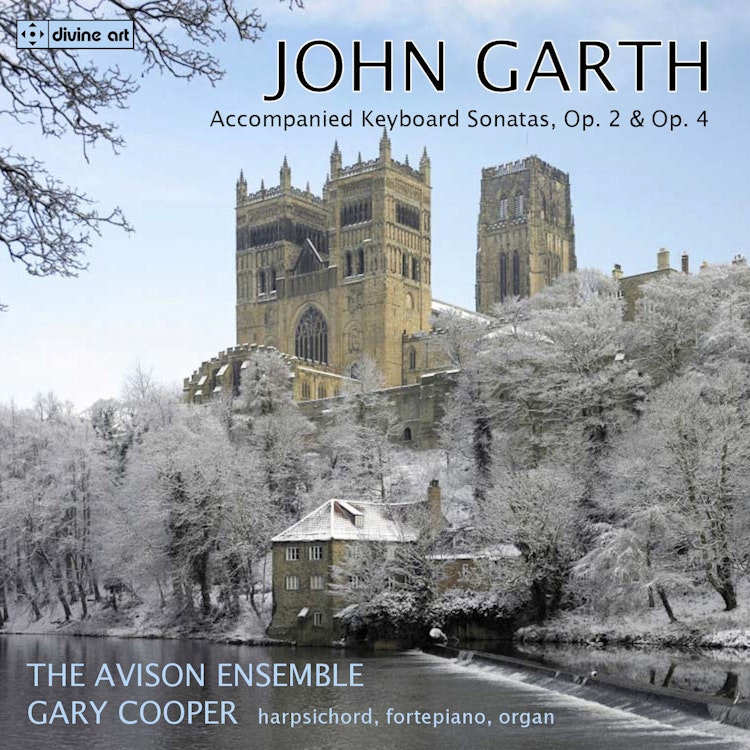
John Garth's Op. 2 set of six sonatas, published in 1768, was exceptionally popular, attracting 261 subscribers for 323 copies and being reissued at least five times.
Critical Reception
John Garth's Op. 2 keyboard sonatas were his greatest compositional success during his lifetime, demonstrating his ability to write popular music and employ the latest musical techniques.
Composer Biography
John Garth, born in 1721, had an inauspicious background, with his father dying when he was four, but this did not impact his education.
Compositional Technique
John Garth's sonatas typically feature a two-movement plan, with many first movements using a rounded binary structure with a 'double-return,' a key feature of sonata form.
Instruments
John Garth's sonatas could be played on various keyboard instruments, including harpsichord, spinet, organ, or pianoforte, and some even included crescendo markings, indicating suitability for pianoforte or new harpsichord developments.
Composer's Artistic Vision
While some of John Garth's sonatas were performed in concerts, they were primarily conceived for domestic performance, with keyboard parts suitable for amateur female musicians.
Composer Biography
John Garth was an organist at St Edmund's Church in Sedgefield and also for the Bishop of Durham at Auckland Castle, holding the latter position until 1794.
You might also enjoy...
The Privileged Oboe
Roman: The Swedish Virtuoso
Telemann: Complete Horn Concertos for Horns, Strings & Basso Continuo
Kuhnau: Neuer Clavier-Ubung, Vol. 1
Manfredini: Sinfonie da chiesa
Concertos and Opera Overtures
Dall'Abaco, E.F.: Concerti for Strings - Opp. 2, 6