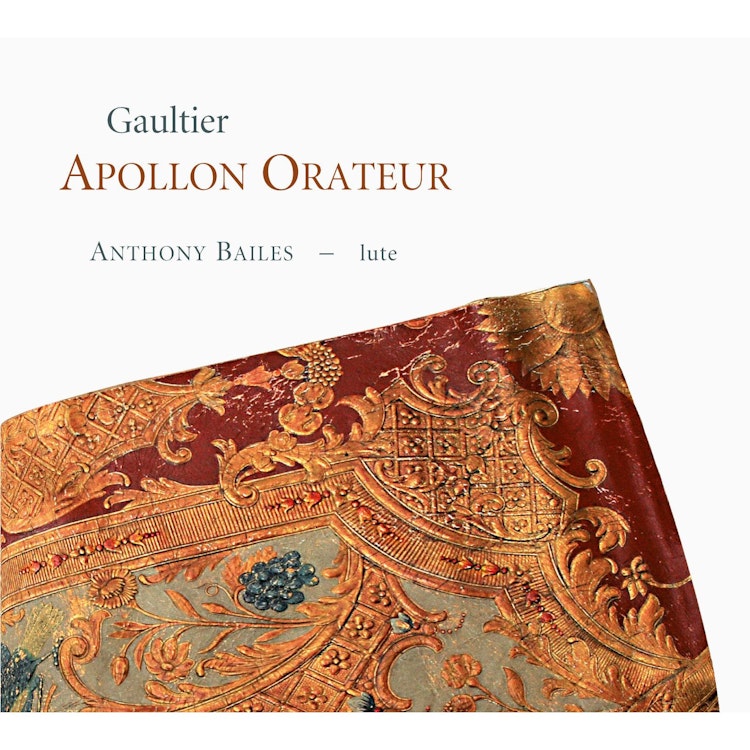
Denis Gaultier, a 17th-century French lutenist, was so highly esteemed that a contemporary manuscript described him as Apollo, the god of music, fine arts, and eloquence, in human form.
Compositional Technique
Denis Gaultier's compositions are noted for their economy of writing, with no superfluous notes, and a musical structure reduced to its essence, a minimalist approach that became even more apparent in his later published versions.
Composition History
The sumptuous manuscript La Rhétorique des Dieux, containing 54 compositions by Denis Gaultier, was created as a lasting monument to his art by a group of artists under the patronage of Anne-Achille de Chambré.
Composer's Artistic Vision
Denis Gaultier deliberately avoided keys like D major and D minor, which were favored by lutenists of his day, to demonstrate his skill in drawing out the subtle resonances of the lute in other keys like G major, A minor, and E minor.
Instruments
The lute used for this recording was made by Gregori Ferdinand Wenger of Augsburg in 1722 and is strung with gut strings, with bass strings loaded with metal salts, to emulate 17th-century performance practice.
Composer Biography
Denis Gaultier published his Pièces de Luth because his music was circulating in a heavily altered form, and he wanted to ensure correct notation, detailed fingering, and ornament signs.
Performer Biography
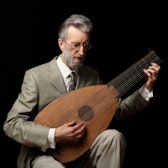
Anthony Bailes, the lutenist on this album, initially studied guitar before a chance meeting with Diana Poulton led him to study the lute, and he later received a grant to further his studies in Switzerland.
You might also enjoy...
The Music of Mikhail Glinka: The Czar's Guitars
La Mascarade - Music For Solo Baroque Guitar And Theorbo
Fast Fantasy
Sortilegios
Visee, R. De: Suites
Jonas Tamulionis - Selected Compositions For Guitars
Francesco da Milano: Il divino
Cifras imaginarias: Música para tañer a dos vihuelas
Europäische Lautenmusik Vol. 2
The Grandeur Of The Baroque
Intavolatura di chitarone
Corbetta, F.: Varii Scherzi Di Sonate / Mantovana / Sinfonia / Folia (A Guitarist From Pavia Across Europe) (La Ghirlanda Mosicale)